Why Your Home Still Feels Messy Even After Cleaning (And What Helps)
You finish cleaning and take a look around, expecting relief. The floors are vacuumed, the counters are wiped, and things are technically put away. Yet instead of feeling calm or satisfied, something still feels off. The space looks better, but it doesn’t feel settled. This disconnect can be confusing and discouraging, especially when you’ve already…
You finish cleaning and take a look around, expecting relief. The floors are vacuumed, the counters are wiped, and things are technically put away.
Yet instead of feeling calm or satisfied, something still feels off. The space looks better, but it doesn’t feel settled. This disconnect can be confusing and discouraging, especially when you’ve already spent time and energy cleaning.
If this happens in your home, you are not doing anything wrong. This experience is extremely common, and it has very little to do with how hard you worked or how well you cleaned.
In most cases, a home can be clean and still feel messy because the issue is not dirt. It’s friction, visual noise, and how the space interacts with daily life.
Once you understand what’s really causing this feeling, the solutions are often simpler and gentler than cleaning more. In many cases, doing less, but doing it differently, creates a much bigger sense of calm.
Clean and Calm Are Not the Same Thing
Cleaning removes dust, crumbs, and grime. Calm comes from clarity, ease, and visual rest. When those two goals are confused, it’s easy to keep cleaning without ever feeling satisfied.
A home can be spotless and still feel overwhelming if there are too many things competing for attention. Your brain doesn’t only respond to cleanliness. It also responds to what it has to process visually and mentally when you walk into a room.
If your space still feels messy after cleaning, it’s often because your brain hasn’t received a clear signal that the space is “done.” Instead, it’s still picking up on unfinished cues.
Reason 1: Too Many Small Items Are Still Visually Active
One of the biggest reasons a clean home still feels messy is visual overload. Small items left out on surfaces may be useful, decorative, or meaningful, but when there are too many of them, your brain stays alert.
Mail, keys, chargers, notebooks, candles, remotes, decor, and everyday objects all demand a small amount of attention. Individually, they seem harmless. Together, they create constant visual activity that prevents your mind from resting.
What helps:
Instead of focusing on removing everything, focus on reducing how much is visually “on.” Choose one or two key surfaces in each room to quiet. This might be the kitchen counter, the coffee table, or the entryway shelf.
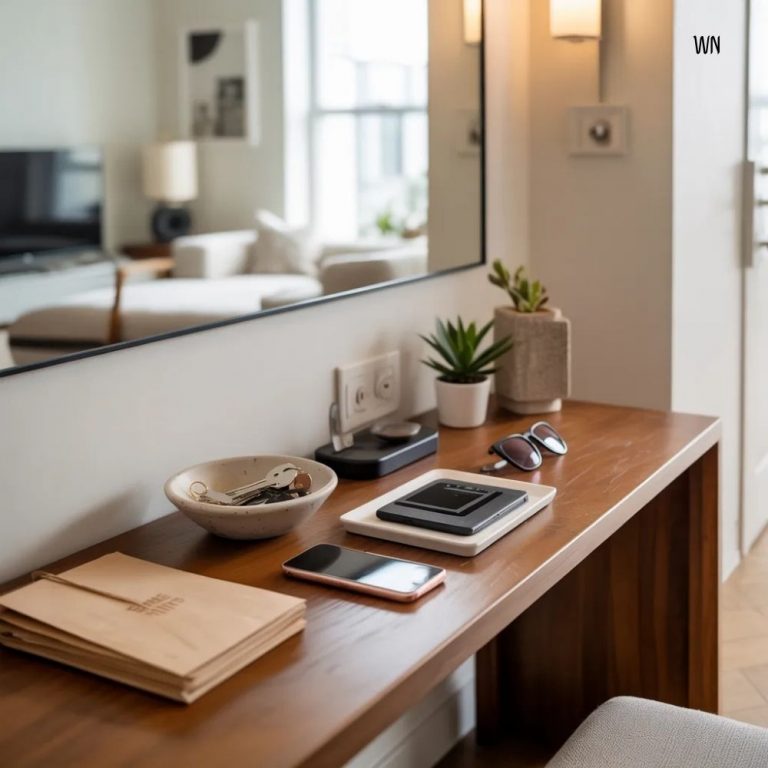
Grouping items together helps immediately. Five items on a tray feel calmer than five items spread across a surface. A basket containing loose objects creates a single visual unit instead of multiple competing ones. The goal is not minimalism. The goal is visual rest.
Reason 2: Things Are Put Away, But Not Easily Enough
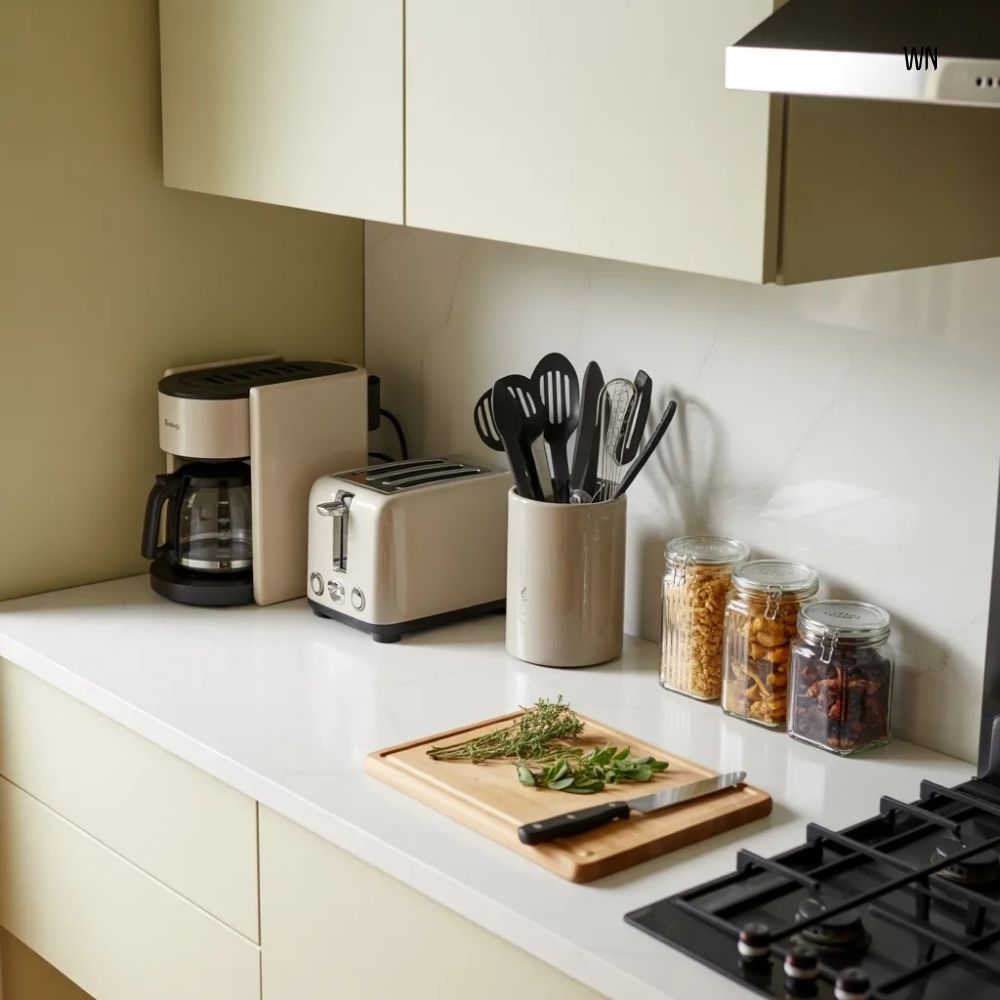
When items technically have a home but that home is inconvenient, clutter rebuilds quickly. This creates a cycle where you clean, put things away, and then watch them slowly creep back out.
This often happens when storage is based on where things “should” go instead of where they are actually used. The extra step creates friction, and friction creates mess.
What helps:
Reassign homes based on real habits. If something is used daily, it should be stored where you naturally reach for it. If it takes effort to put away, it will not stay put for long.
This might mean moving items closer to where they’re used or letting go of idealized storage rules. A functional home prioritizes ease over aesthetics. When putting things away feels natural instead of forced, clutter stops rebuilding so quickly.
Reason 3: Flat Surfaces Have Become Default Drop Zones
Flat surfaces quietly invite clutter. Counters, tables, chairs, and shelves become places where things land “for now,” and then stay longer than intended.
Even after cleaning, if flat surfaces immediately begin collecting items again, the room will feel unsettled almost right away.
What helps:
Create intentional drop zones instead of accidental ones. Choose one small area per space where daily items are allowed to land. This might be a tray for keys and mail, a basket for everyday essentials, or a bowl for loose items.
When clutter has permission to exist in one contained spot, it stops spreading everywhere else. The rest of the space stays clearer with less effort. This single shift often makes the biggest difference in how clean a room feels long-term.
Reason 4: The Room Has No Clear “Reset” Moment
Many homes lack a sense of completion. Cleaning happens, but there is no clear signal that the space has returned to neutral. Without that cue, the room feels like it’s always mid-use.
Your brain is constantly scanning for unfinished tasks. If a room doesn’t have a recognizable reset state, it never feels done.
What helps:
Create a simple reset ritual for each main area of your home. This is not deep cleaning. It’s a short, repeatable action that signals closure.
In the living room, it might be straightening cushions. In the kitchen, clearing the sink at night. In the bedroom, smoothing the bed or closing the closet door.
These small resets tell your brain the space is settled. Over time, this creates a sense of calm that cleaning alone doesn’t provide.

Reason 5: Too Many Visual Elements Compete for Attention
Even clean rooms can feel chaotic if there is too much variation in color, texture, or shape. Open shelves filled with mixed items, mismatched decor, or crowded walls all increase visual noise.
Your brain reads this as busyness, which translates into messiness, even if nothing is dirty.
What helps:
Soften the visual field. This doesn’t require redecorating or buying anything. Simply reducing how much is visible at once can help.
Close cabinet doors. Align items neatly. Fold throws instead of draping them randomly. Let one or two items per surface stand out, rather than many. Visual calm is about balance, not emptiness.
Reason 6: Your Home Isn’t Built for Busy Days
Many homes are organized for ideal days, not real ones. When life gets busy, systems break down quickly, and the space feels constantly behind.
If your home requires perfect habits to stay tidy, it will almost always feel messy.
What helps:
Build systems that assume busy days will happen. Fewer steps to put things away. Wider margins. More forgiveness built in.
This might mean fewer items overall, easier access storage, or accepting that some clutter is part of daily life. A home that supports real life feels calmer even when it’s not perfect.
Why Cleaning More Often Rarely Solves the Problem
Cleaning addresses surface-level issues. It doesn’t reduce the friction that causes mess to return. When friction stays high, mess rebuilds quickly, and cleaning becomes a constant cycle.
This is exhausting and discouraging, especially when you feel like you’re always catching up.
Shifting focus from cleaning more to supporting flow reduces how fast mess appears. When mess builds more slowly, cleaning suddenly feels more effective.
A Gentle Reset That Actually Lasts
If your home still feels messy after cleaning, try this instead of doing more:
- Quiet one surface
- Group what stays out
- Give one frequently used item a better home
- Reset one small area at the same time each day
These steps take minutes, not hours, but they change how the space functions. The result is a home that feels calmer without constant effort.
Making Calm Sustainable
The most peaceful homes are not the cleanest ones. They are the ones that require the least effort to maintain. Sustainable calm comes from:
- Fewer visual distractions
- Clear homes for daily items
- Gentle resets
- Systems designed for real life
When your home works with you instead of against you, cleaning feels lighter and more rewarding.
A Calm Takeaway
If your home still feels messy after cleaning, it is not because you didn’t do enough. It is because cleaning alone does not create calm.
Small shifts in how your space handles daily life can change everything. Reducing visual noise, lowering friction, and creating simple reset points help your home feel settled in a way that lasts.
You do not need to clean more or aim for perfection. A calm home does not look flawless. It supports you quietly, even on ordinary, imperfect days.