The Easiest Way to Plan Meals Without Feeling Restricted
Meal planning gets a bad reputation because many people experience it as controlling, repetitive, or unrealistic. Plans look good on paper, but by the third day life shifts, energy changes, and the plan starts to feel like a burden rather than a help. When that happens, meal planning feels like something we failed at instead…
Meal planning gets a bad reputation because many people experience it as controlling, repetitive, or unrealistic. Plans look good on paper, but by the third day life shifts, energy changes, and the plan starts to feel like a burden rather than a help.
When that happens, meal planning feels like something we failed at instead of something that failed to support us. The problem is not planning itself. The problem is planning in a way that ignores how real life actually works.
The easiest way to plan meals without feeling restricted is to stop planning exact meals for exact days and start planning options, overlaps, and flexibility instead.
When meal planning supports choice rather than removing it, it becomes lighter, easier to maintain, and far more useful. This approach helps you cook more often, waste less food, and spend less mental energy on deciding what to eat, all without locking you into a rigid schedule.
Why Traditional Meal Planning Feels Restrictive
Traditional meal planning usually asks too much upfront. It requires predicting future energy, appetite, schedules, and preferences days in advance. When any of those change, the plan breaks. This creates guilt and the feeling that planning itself is the problem.
Another issue is that many meal plans are recipe-driven. Each meal is treated as a separate project with its own ingredients and steps. This increases shopping, prep time, and waste. It also removes flexibility, because ingredients are tied to specific meals rather than interchangeable options.
Finally, traditional meal planning often assumes that consistency means repetition. People fear eating the same thing too often or losing spontaneity, which makes planning feel limiting rather than freeing. The solution is to plan structures instead of outcomes.
The Core Principle: Plan Ingredients and Formats, Not Exact Meals
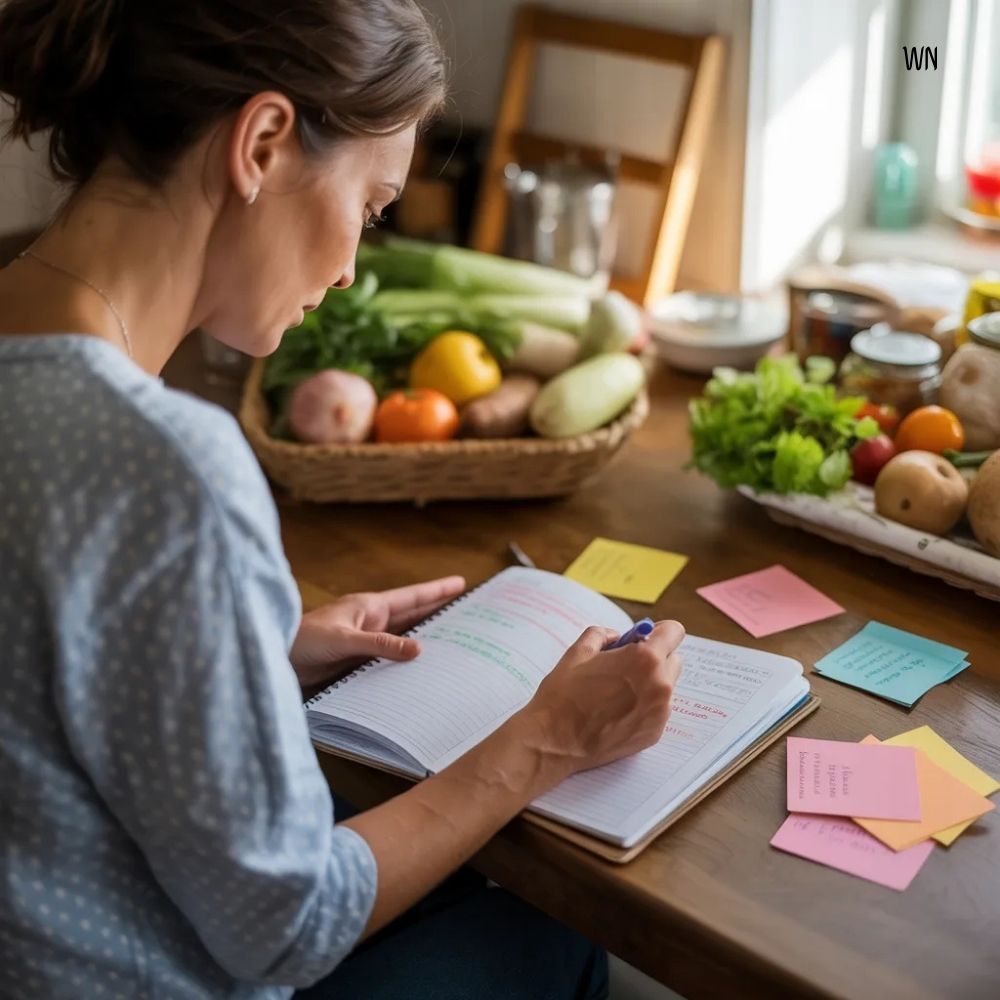
The easiest and least restrictive way to plan meals is to plan what you will have available, not exactly what you will eat on each day. This shifts meal planning from prediction to preparation.
Instead of deciding that Monday is pasta, Tuesday is soup, and Wednesday is stir-fry, you decide which ingredients will be in your fridge and pantry and which formats you are open to making.
This allows you to respond to how you feel on the day while still staying within a plan. When ingredients overlap and formats are flexible, meals assemble themselves naturally.
Step One: Choose a Small Set of Flexible Ingredients
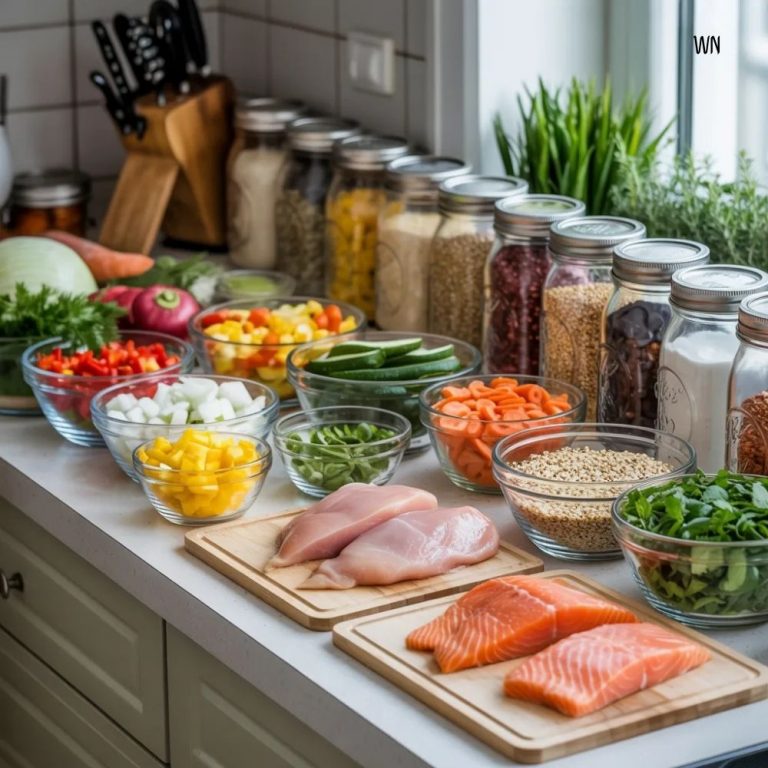
We begin by choosing a small group of ingredients that can be used in multiple ways. These should be ingredients you already like and know how to cook. There is no benefit in planning around unfamiliar foods during busy weeks.
Flexible ingredients include proteins that can be cooked simply and seasoned later, vegetables that work both cooked and raw, and bases like rice, pasta, or bread that support many meals. The goal is to create a shared ingredient pool rather than separate lists for each recipe.
When most meals pull from the same ingredient set, planning becomes simpler and shopping becomes shorter.
Step Two: Plan Meal “Formats” Instead of Recipes
A format is a general meal structure, not a specific dish. Examples include bowls, wraps, salads, stir-fries, soups, or sheet-pan meals. Formats are powerful because they are adaptable. The same ingredients can fit into multiple formats depending on mood and time.
For example, cooked vegetables and protein can become a bowl one night, a wrap the next, or added to soup later in the week. By choosing a few formats you enjoy, you give yourself a framework without dictating details. This keeps meals interesting without increasing complexity.
Step Three: Build Overlap on Purpose
Overlap is what makes meal planning feel easy rather than restrictive. When ingredients and prep overlap across meals, effort decreases instead of increasing.
This might mean cooking extra vegetables once and using them across several meals, or choosing sauces that work with multiple proteins. Overlap reduces the feeling of starting from scratch each day and makes leftovers useful rather than repetitive. The more overlap you build in, the less pressure there is to follow a strict plan.
Step Four: Leave Open Slots for Choice
One of the most important steps in non-restrictive meal planning is intentionally leaving space for choice. Not every meal needs to be planned, and not every day needs structure.
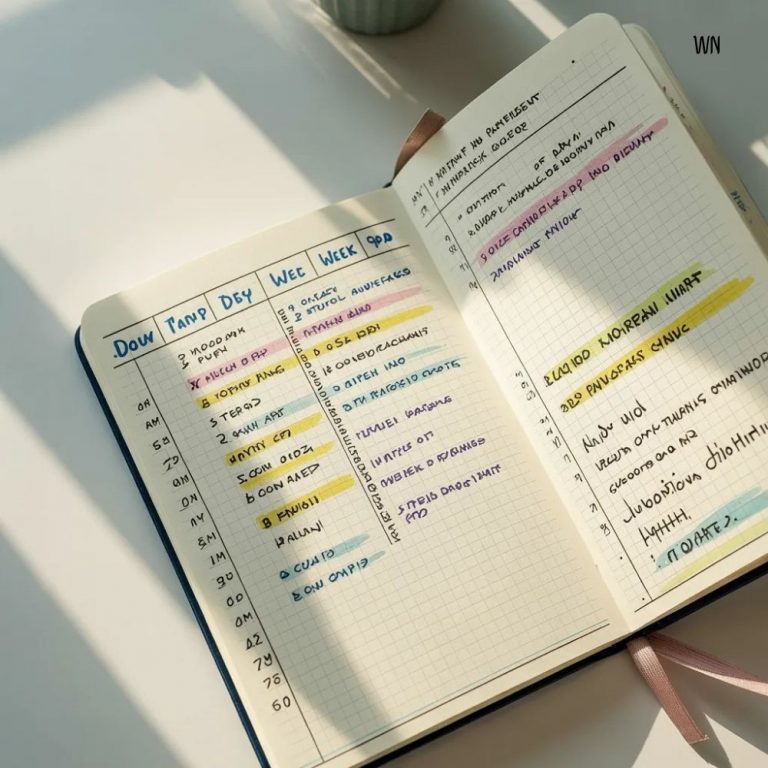
Leaving one or two meals completely open allows room for takeout, leftovers, or spontaneous ideas. This prevents the plan from feeling suffocating and makes it more resilient to schedule changes. Planning less often leads to better follow-through.

Step Five: Prep Ingredients Lightly, Not Fully
Full meal prep can feel restrictive because it locks meals into a specific form. Instead, we recommend light ingredient prep.
This might include chopping vegetables, cooking grains, or preparing a protein in a neutral way. These ingredients can then be combined differently each day. Light prep reduces daily effort while preserving flexibility.
When ingredients are ready but meals are not fixed, cooking stays quick and adaptable.
Step Six: Use Leftovers as Building Blocks
Leftovers often feel limiting because they are treated as finished meals. In flexible planning, leftovers are ingredients.
For example, roasted vegetables can become part of a salad, a bowl, or a pasta dish. Cooked protein can be repurposed into wraps or soups.
This prevents boredom and keeps food moving instead of piling up. When leftovers are viewed as components, they expand options rather than reducing them.
Step Seven: Keep a Short “Fallback” List
Some days, decision-making feels harder than cooking itself. A fallback list solves this problem.
A fallback list is a short list of meals you can make quickly with minimal effort and ingredients you usually have. These meals are not exciting, but they are reliable. Knowing they are always an option removes pressure. This list supports consistency without forcing variety.
Step Eight: Shop With the Plan, Not Recipes
When you shop for flexible meal planning, your list should reflect ingredients rather than dishes. This keeps the fridge adaptable and prevents overbuying.
Shopping this way also makes it easier to adjust plans midweek. If you decide to change formats, the ingredients still work. A flexible grocery list supports flexible cooking.
Why This Method Feels Lighter Over Time
This method works because it reduces pressure. You are not committing to exact outcomes. You are creating supportive conditions.
Over time, you develop a natural rhythm. Planning takes less time. Cooking feels easier. Food waste decreases. Most importantly, meals feel supportive rather than restrictive.
If planning starts to feel heavy again, reduce structure rather than adding more. Fewer ingredients, fewer formats, and fewer planned meals often restore ease quickly. The goal is always to support real life, not control it.
A Helpful Final Thought
Meal planning does not need to feel like a rulebook. When we plan ingredients instead of outcomes and build in flexibility instead of rigidity, meals become easier and more enjoyable. The easiest meal plan is one that bends with you rather than pushing against you.
If you’d like, we can next create a one-week flexible grocery list, a busy-week version of this system, or a family-friendly adaptation that still allows choice. Just tell us what would help you most.