How to Set Up a Drop Zone That Actually Works
A drop zone is meant to make life easier, yet for many homes it becomes the messiest spot of all. Keys pile up, bags slide onto the floor, mail stacks without purpose, and shoes multiply in every direction. When this happens, the problem is not a lack of effort or discipline. The problem is that…
A drop zone is meant to make life easier, yet for many homes it becomes the messiest spot of all. Keys pile up, bags slide onto the floor, mail stacks without purpose, and shoes multiply in every direction.
When this happens, the problem is not a lack of effort or discipline. The problem is that the drop zone was never designed to work with how people actually come and go. When a drop zone matches real habits instead of ideal ones, it quietly prevents clutter instead of collecting it.
The good news is that an effective drop zone does not require new furniture, expensive organizers, or extra space.
It requires clarity. When each item has a clear destination that matches how you naturally move, the drop zone stops being a dumping ground and becomes a control point for your entire home. This guide walks you through how to set up a drop zone that stays functional on busy days, low-energy days, and everything in between.
Why Most Drop Zones Fail
Most drop zones fail for the same reason: they ask too much of you in the moment you have the least capacity. When you walk through the door, your hands are full and your attention is already moving on to the next thing. A drop zone that requires sorting, decision-making, or extra steps will not be used consistently, no matter how well-intentioned it is.
Another common issue is scale. Drop zones are often too small for what they are expected to hold. A tiny hook for multiple bags or a narrow shelf for daily clutter forces overflow, which then spreads to the floor and nearby surfaces. When a drop zone cannot physically contain the items it is meant for, clutter becomes inevitable.
Finally, many drop zones mix unrelated items together. Keys, mail, shoes, bags, and random objects all compete for the same space without boundaries. This creates visual noise and makes it harder to put things back, even when you want to.
The Core Rule of a Drop Zone That Works
Before setting anything up, there is one rule we follow: a drop zone must match the exact moment you walk into the house. That moment is rushed, distracted, and hands-full. The setup must work even when you are tired, carrying groceries, or trying to get somewhere else quickly.
If an item does not have a clear place that can be used one-handed and without thinking, it will end up somewhere else. This is not a failure on your part. It is feedback from the system. A working drop zone removes friction instead of adding it.
Step One: Decide What Truly Belongs in the Drop Zone
The first step is deciding what items actually belong in your drop zone. This is not a storage area for everything you own. It is a transition space for items that move in and out of the house daily.
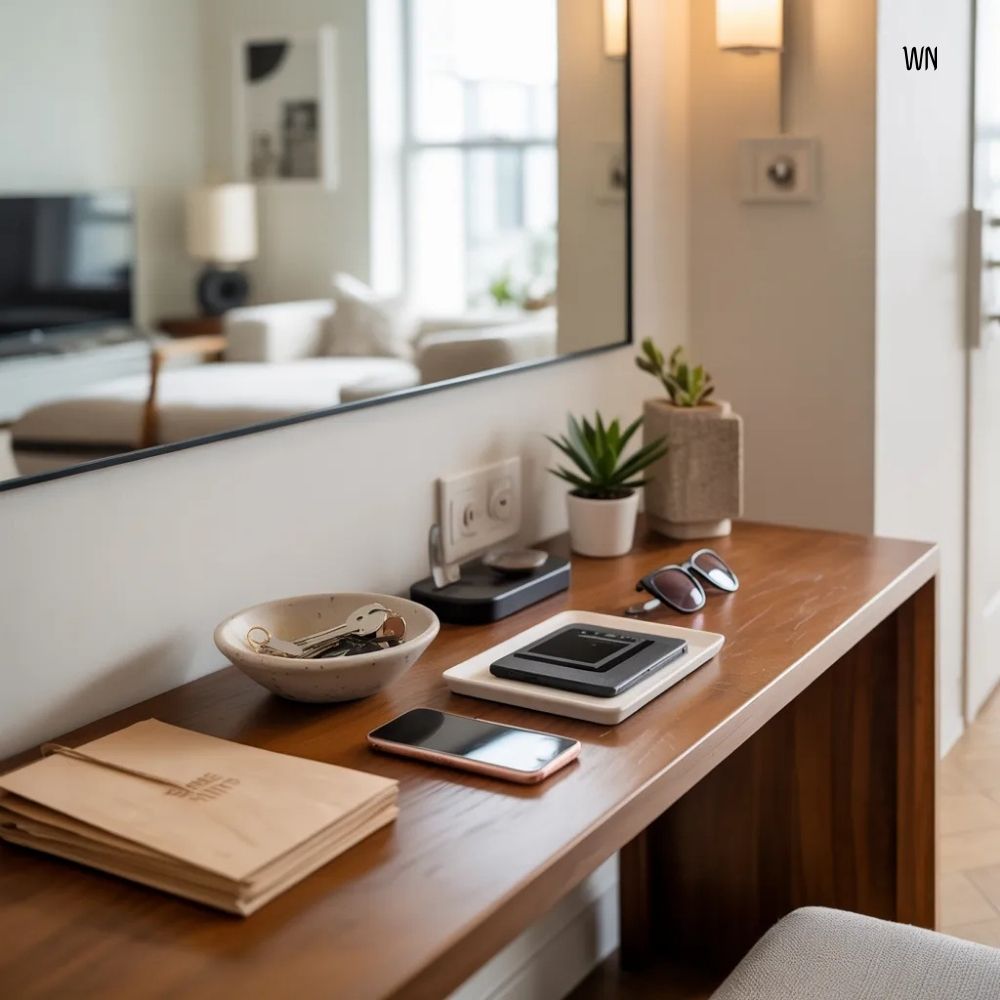
For most households, this includes keys, bags, wallets, sunglasses, mail, shoes, and occasionally jackets or hats. If something does not leave the house regularly or does not arrive with you when you come home, it does not belong here. Reducing the number of item types immediately makes the space easier to manage.
Once you know what belongs, you can design the space to support those specific items rather than guessing or overloading it.
Step Two: Place the Drop Zone Where You Naturally Stop
A drop zone only works if it is placed where you already pause. This might be just inside the door, along a hallway wall, or near the kitchen entrance. The exact location matters less than the flow. If you have to walk past the drop zone to get to where you usually stop, it will be ignored.
We recommend choosing the first flat surface or wall area you naturally gravitate toward when you come home. This ensures the drop zone fits into your existing routine instead of asking you to create a new one.
Step Three: Give Each Item Its Own Clear Boundary
The most important physical feature of a successful drop zone is separation. Each category of item needs its own defined space. When items share space, clutter grows. When each item has a boundary, returning things becomes automatic.
Keys should have a single, obvious home, such as hooks or a small tray. Bags need a hook or basket that can support their weight without collapsing or spilling.
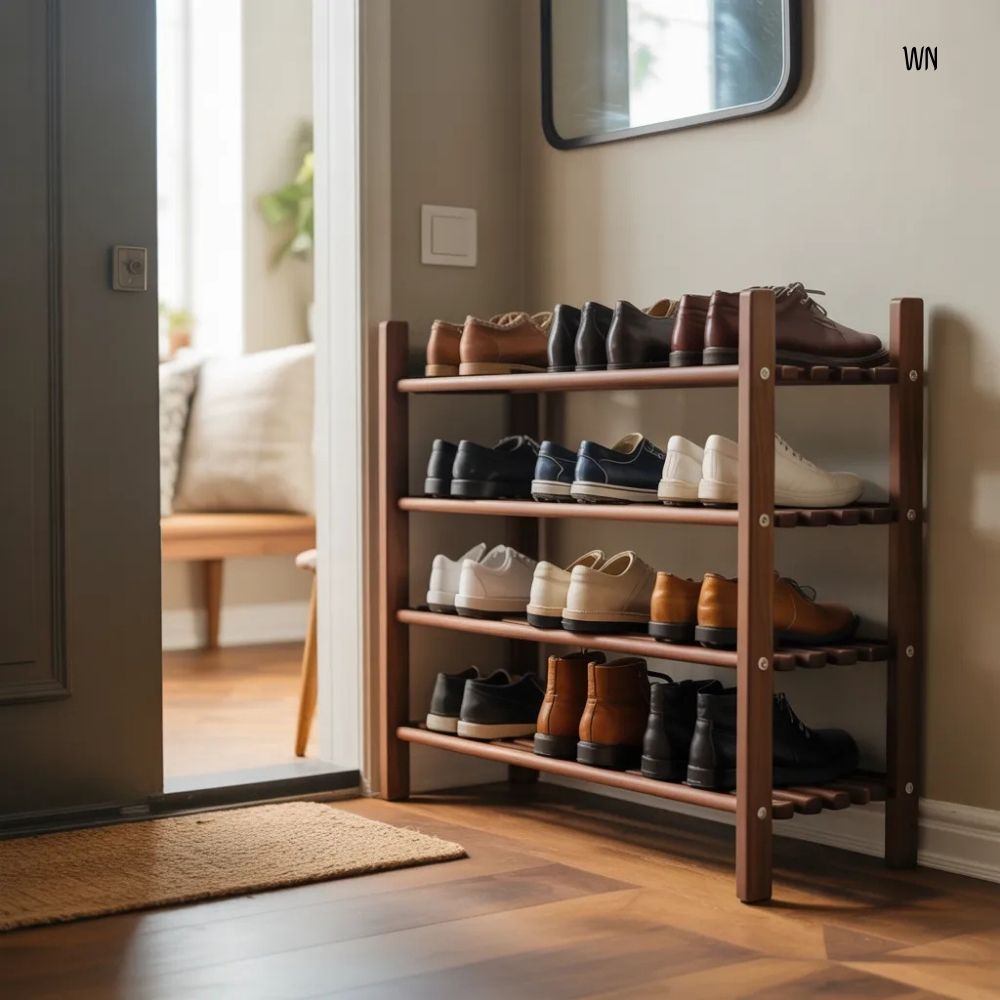
Shoes require enough floor space or a low shelf so they are not stacked or kicked aside. Mail should have one vertical holder or shallow bin, not a flat surface where it spreads.
Step Four: Design for the Maximum, Not the Average
One of the most common mistakes is designing a drop zone for an average day. Real life includes heavy bags, extra shoes, packages, and unexpected items. When the drop zone cannot handle busy days, clutter spills out and stays out.
We recommend setting up the space to handle the worst realistic case. If you often carry two bags, install hooks for three. If three people use the drop zone, allow space for at least four pairs of shoes. Extra capacity creates breathing room and prevents overflow from becoming permanent.
Step Five: Keep the Drop Zone Shallow and Visible
Depth is the enemy of a drop zone. Deep baskets, tall bins, and stacked storage hide items and encourage dumping. A shallow setup keeps everything visible and easier to put away.
Hooks should be spaced so items do not overlap excessively. Bins should be low enough that contents are visible at a glance. Shoes should be stored in a single layer whenever possible. Visibility reduces mental effort and prevents forgotten items from accumulating.
Step Six: Build in One Simple Exit Habit
A drop zone works best when there is a simple habit that clears it regularly. This does not need to be daily or strict. It can be as simple as emptying the mail once a week or returning stray items to their proper rooms at the end of the day.
The key is that the habit is small and predictable. When you know the drop zone will be reset regularly, it stays manageable without becoming another chore.
Why This Setup Works Long-Term
This approach works because it respects how people actually behave. It removes unnecessary decisions, allows for busy days, and creates clear homes for items that otherwise drift. Over time, the drop zone becomes a stabilizing point in the home. You spend less time searching for things, mornings feel calmer, and clutter is contained instead of spreading.
Many people notice that once the drop zone works, other areas of the home feel easier to manage. That is because one major source of daily clutter has been resolved.
If clutter starts creeping back, treat it as information rather than failure. Look at what is piling up and ask whether it truly belongs there, whether it needs its own boundary, or whether the space needs more capacity. Small adjustments keep the system working without a full reset.
A Helpful Final Thought
A drop zone that works does not require constant effort. It works because it fits your life. When each item has a clear place and the space matches how you move through your home, clutter stops feeling personal and starts feeling solvable.
If you would like, next we can create a small-space drop zone, a family-friendly version, or a nightly reset that keeps the drop zone clear in under two minutes. Just tell us what would help you most.