How to Organize Clothes So Getting Dressed Is Faster
Getting dressed should be one of the easiest parts of the day, yet for many of us it quietly becomes a daily slowdown. We stand in front of the closet, look through clothes we own, and still feel unsure about what to wear. Time disappears not because the task is complicated, but because the setup…
Getting dressed should be one of the easiest parts of the day, yet for many of us it quietly becomes a daily slowdown. We stand in front of the closet, look through clothes we own, and still feel unsure about what to wear.
Time disappears not because the task is complicated, but because the setup does not support quick decisions. When clothes are hard to see, hard to reach, or not organized around how we actually get dressed, every morning starts with unnecessary friction.
The encouraging truth is that getting dressed faster does not require fewer clothes, a capsule wardrobe, or strict rules. It requires organizing clothing around decision speed, not storage logic.
When your clothes are arranged to match how your brain chooses outfits, mornings become smoother, calmer, and noticeably faster without feeling rushed.
Why Getting Dressed Takes Longer Than It Should
Getting dressed slows down for three main reasons. First, too many options are visible at once, which creates decision fatigue. When everything competes for attention, the brain struggles to choose quickly.
Second, clothes are often stored by category alone, not by how frequently they are worn. Items you wear daily are mixed with items you rarely reach for, forcing you to search. Third, outfits are built from scratch every morning, even though most people repeat similar combinations again and again.
Another hidden issue is friction. When clothes are hard to access, require moving other items out of the way, or live in multiple locations, each small delay adds up.
None of this feels dramatic in the moment, but together it can add several minutes to the morning routine. The solution is not better taste or more planning. It is better structure.
The Core Principle: Organize for Speed, Not Storage
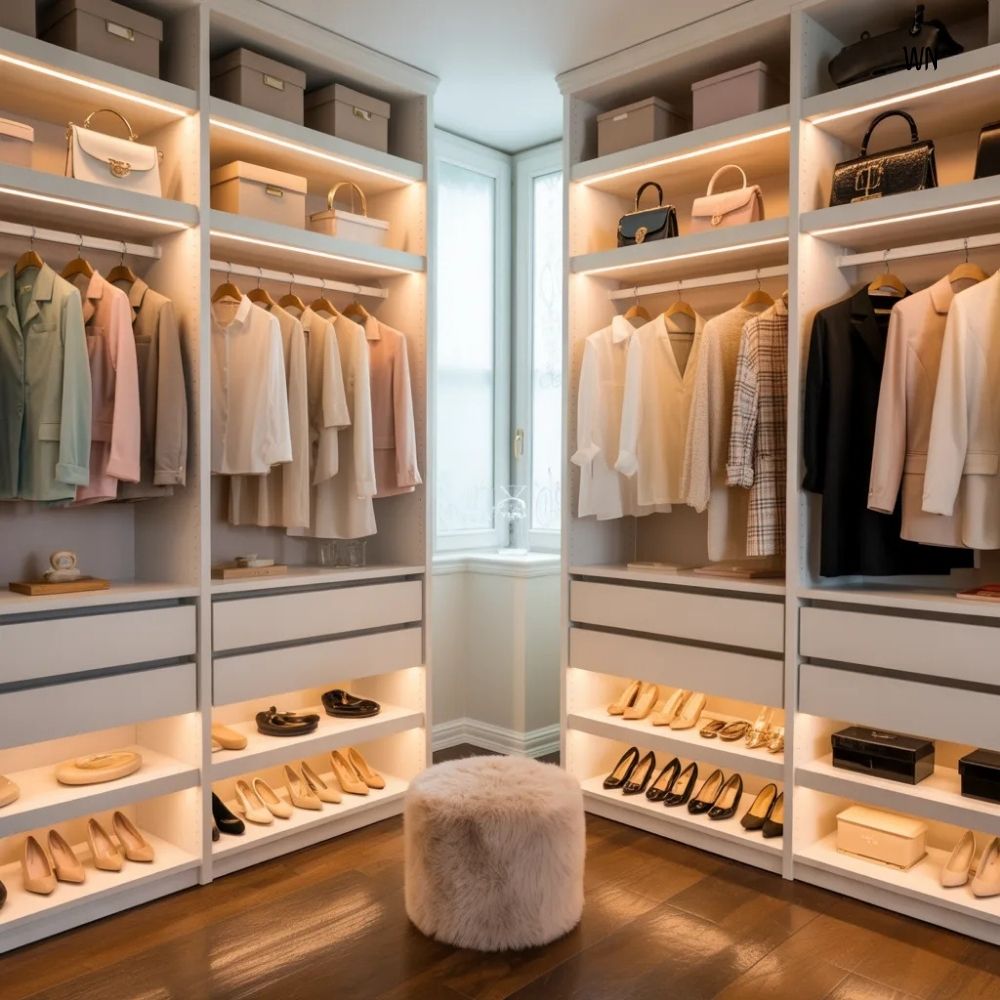
The most important shift is understanding that clothing organization should support fast decisions, not just neat storage. A closet can look tidy and still slow you down if it does not reflect how you actually choose clothes.
To get dressed faster, the clothes you wear most often must be the easiest to see, reach, and combine. Items that require thought or special occasions should move out of the main decision path.
This reduces cognitive load and allows your body to move on autopilot during busy mornings. When organization matches behavior, speed becomes automatic.
Step One: Identify Your Real “Daily Clothes”
Before reorganizing anything, we need to be honest about what you actually wear. Most people wear a small percentage of their clothes most of the time. These are your daily clothes. They might change seasonally, but at any given time, they form the core of your wardrobe.
Take a moment to identify which items you reach for week after week. These are the clothes that should dominate your main closet space. Items that are worn occasionally, seasonally, or only for specific events should not compete with daily clothes for visibility.
This step alone often reveals why getting dressed feels slow. When daily clothes are buried among rarely worn items, every morning becomes a search.
Step Two: Create a “Fast Zone” in Your Closet
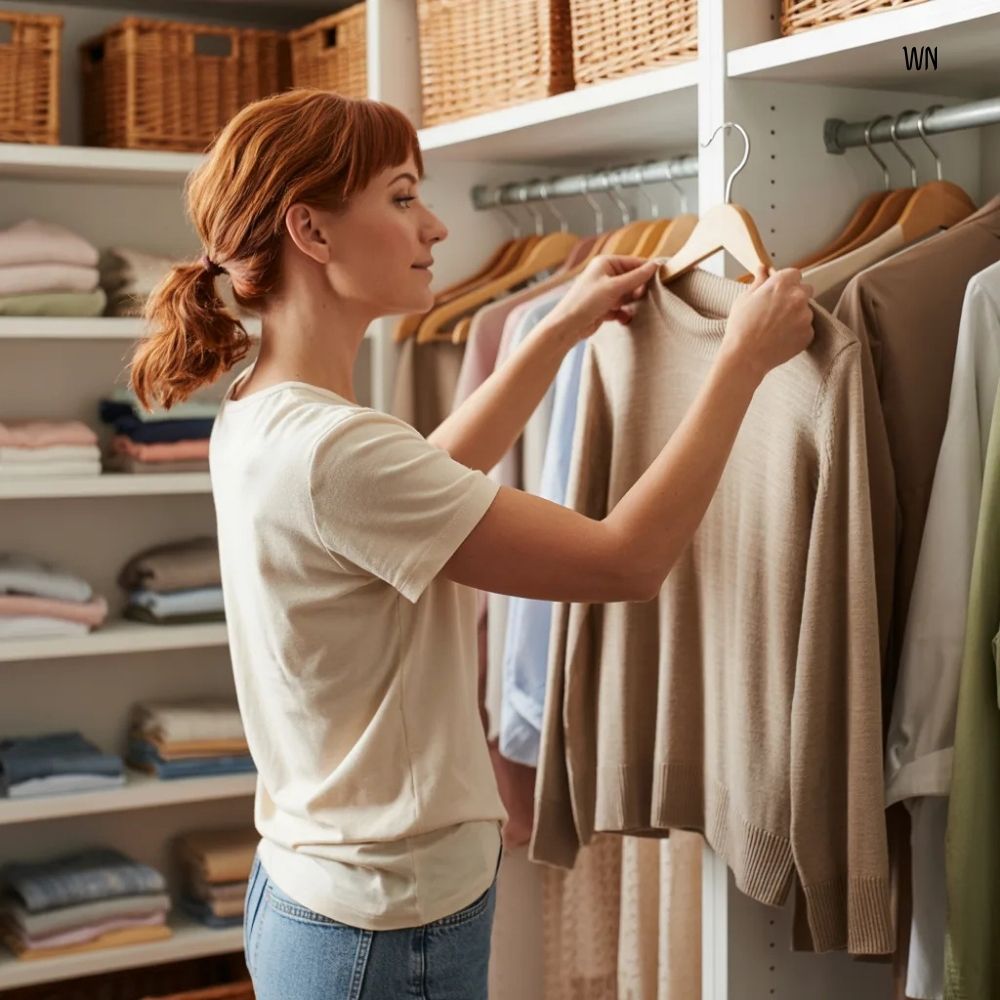
Once you know your daily clothes, create a Fast Zone where these items live. This zone should be the most accessible part of your closet or dresser. It should be at eye level, easy to reach, and free of clutter.
In the Fast Zone, hang or fold items you wear most often. Arrange them so you can see options at a glance. Avoid overcrowding. If items are packed tightly together, the zone loses its speed advantage.
This zone becomes your default starting point every morning. By limiting what you see first to reliable options, decisions happen faster without feeling restrictive.
Step Three: Group Clothes by Outfit Logic, Not Category Alone
Traditional organization groups clothes by type, such as all shirts together and all pants together. While this is logical, it is not always efficient for getting dressed quickly. Most people think in outfits, not isolated items.
To speed up dressing, group clothes in a way that supports easy pairing. This might mean placing pants near the tops you usually wear with them, or grouping work outfits separately from casual ones.
Even subtle grouping, such as light tops near light bottoms and darker items together, reduces decision time. The goal is not to pre-plan outfits rigidly, but to make good combinations easier to see and choose.
Step Four: Limit the Number of Choices You See at Once
Seeing too many options slows decision-making. One of the fastest ways to speed up dressing is to reduce visual overload.
This does not require removing clothes permanently. It simply means moving less-used items out of the main view. Seasonal items can be stored elsewhere. Occasion-specific clothing can be grouped at one end of the closet or in a separate section. Duplicate items can be consolidated.
When fewer options are visible, the brain chooses faster and with more confidence. This is a psychological effect, not a discipline issue.
Step Five: Use Consistent Hangers and Folding Methods
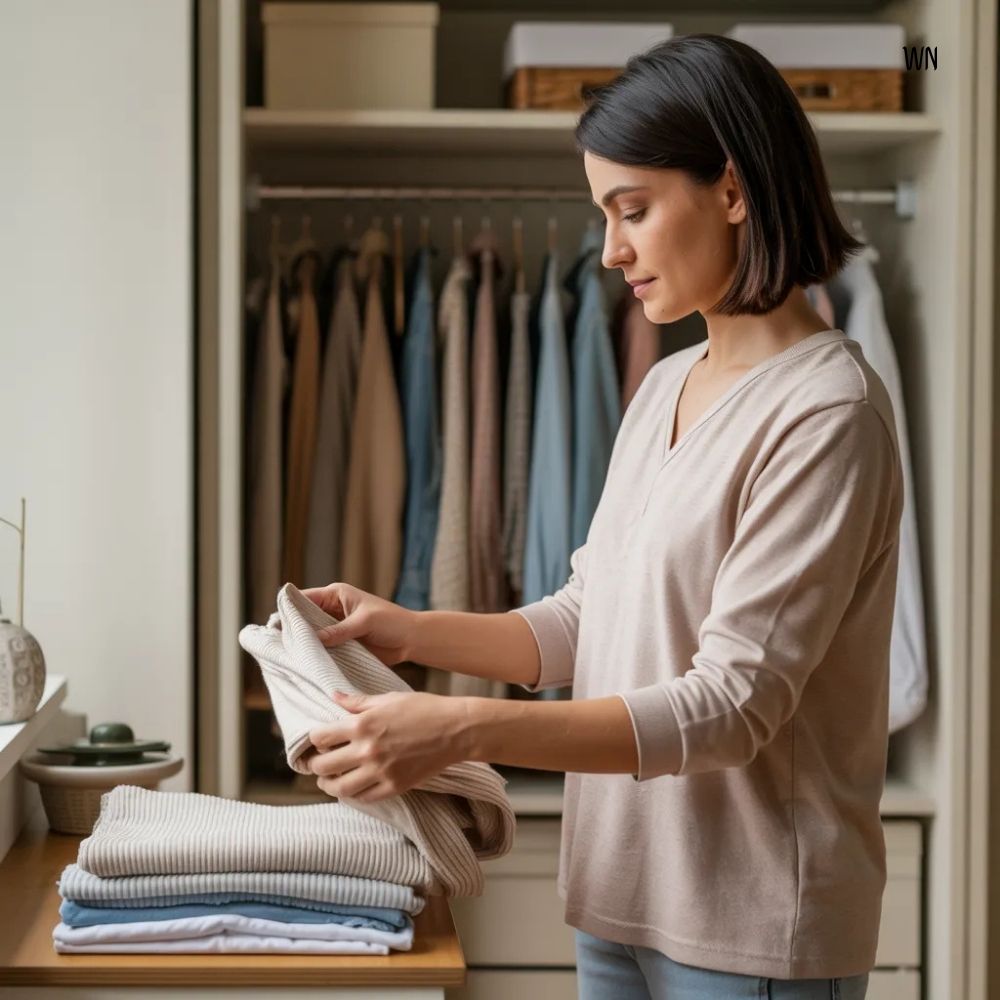
Consistency matters more than style when it comes to speed. Using the same type of hanger for similar clothing creates visual uniformity, which makes scanning easier. When items hang at the same height and face the same direction, your eyes can process options more quickly.
The same applies to folded clothes. Using a consistent folding method and stack size makes drawers easier to navigate. When stacks are too tall or inconsistent, clothes become harder to access and re-stack, which slows you down. This step is not about aesthetics. It is about reducing friction.
Step Six: Create a “Fallback Outfit” System
Even with good organization, some mornings feel harder than others. On those days, a fallback outfit saves time and energy.
A fallback outfit is a combination you know works and feels comfortable. It can be worn repeatedly without thought. Keeping the pieces of this outfit together in the Fast Zone ensures you always have a quick option when decision-making feels heavy.
Step Eight: Reset Clothing at the End of the Day
Getting dressed faster in the morning often starts the night before. A simple end-of-day reset keeps the system working.
This does not mean choosing tomorrow’s outfit every night. It means returning worn clothes to their proper place, placing items back in the Fast Zone, and ensuring nothing drifts out of position.
This reset usually takes under a minute and prevents morning confusion. When clothes are returned consistently, the system stays intact with minimal effort.
Why This Approach Works Long-Term
This system works because it aligns with how people actually behave. It reduces decisions, minimizes searching, and supports autopilot. Over time, getting dressed becomes smoother without conscious effort.
Many people notice that once clothing is organized for speed, mornings feel calmer overall. Less time spent deciding means more energy for the rest of the day.
If dressing still feels slow, look for where friction remains. Are daily clothes overcrowded? Are too many options visible? Are accessories causing delays? Small adjustments often restore speed quickly.
This system should evolve with your lifestyle and seasons. It is meant to support you, not constrain you.
A Helpful Final Thought
Getting dressed faster is not about rushing or simplifying your style. It is about removing unnecessary obstacles from a task you do every day. When clothes are organized around how you actually get dressed, mornings become easier without effort or pressure.
If you would like, we can next create a small-closet version, a family-friendly setup, or a seasonal reset that keeps dressing fast year-round. Just tell us what would help you most right now.