Helpful Tips for Keeping Fruits and Vegetables Fresh Longer
Buying fresh fruits and vegetables always feels like a good intention. You imagine colorful meals, quick snacks, and healthier days ahead. Then real life happens. The fridge gets busy, plans change, and suddenly produce starts to wilt or spoil faster than expected. This is incredibly common, and it does not mean you are careless or…
Buying fresh fruits and vegetables always feels like a good intention. You imagine colorful meals, quick snacks, and healthier days ahead. Then real life happens.
The fridge gets busy, plans change, and suddenly produce starts to wilt or spoil faster than expected. This is incredibly common, and it does not mean you are careless or wasteful. It simply means your food needs a little more support.
The good news is that keeping fruits and vegetables fresh longer does not require special containers, complicated rules, or constant effort. A few small storage habits can make a noticeable difference. When produce is stored in ways that support how it naturally behaves, it stays fresh longer and feels easier to use throughout the week.
This guide focuses on four of the most helpful, practical tips that fit easily into everyday kitchens. You do not need to do all of them perfectly. Even one or two changes can reduce waste and make your fridge feel calmer and more organized.
Why Produce Often Spoils Faster Than Expected
Fruits and vegetables continue to change after they are harvested. They release moisture, respond to temperature, and react to nearby foods. When produce is stored without considering these factors, it can spoil earlier than it should.
Most spoilage comes from three main issues. Produce is stored too wet, stored together in ways that speed up ripening, or stored out of sight and forgotten. The tips below address these issues gently and realistically, without adding stress to your routine.
Tip 1: Store Fruits and Vegetables Separately
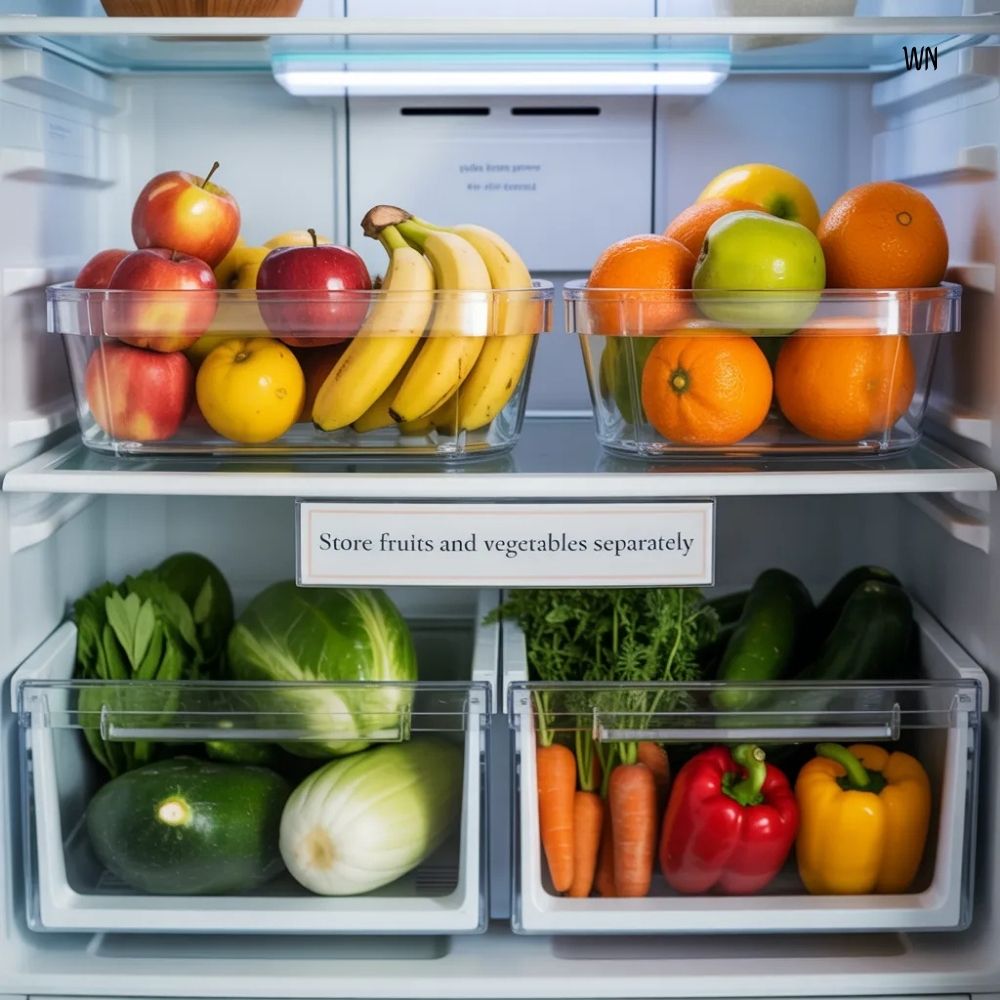
One of the simplest and most effective ways to extend the life of produce is to keep fruits and vegetables apart. Many fruits naturally release gases as they ripen. These gases can cause nearby vegetables to soften, yellow, or spoil more quickly.
In everyday life, this does not need to be complicated. If your fridge has separate drawers, use one for fruits and one for vegetables. If you only have one drawer, grouping fruits on one side and vegetables on the other still helps reduce contact.
This small habit often leads to noticeable improvements within days. Vegetables stay crisp longer, and fruits ripen at a more manageable pace. It is a quiet change that works in the background without requiring extra effort.
Tip 2: Control Moisture With Simple Paper Towels
Moisture is one of the biggest reasons fruits and vegetables spoil early. Too much moisture encourages mold and rot, while too little moisture causes wilting. Finding balance is key.
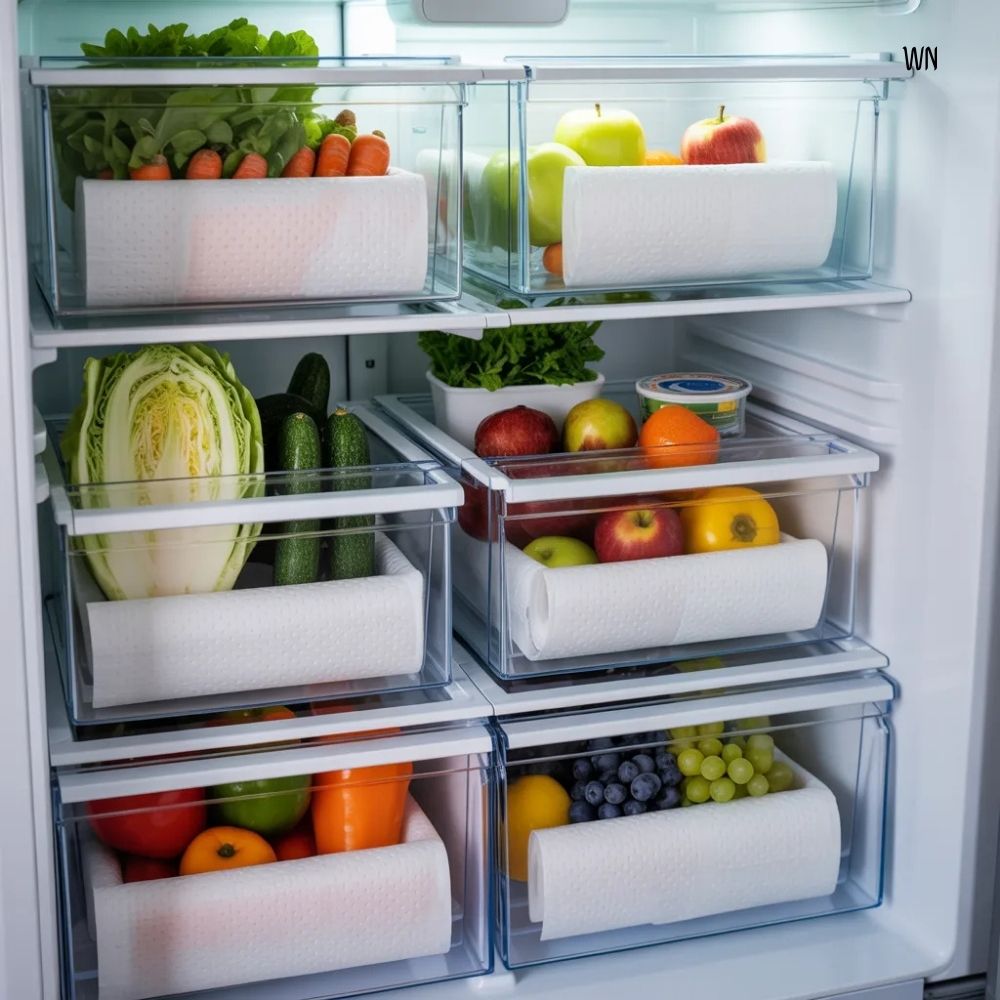
A very simple way to manage moisture is by using dry paper towels. Lining produce drawers or placing a paper towel inside bags or containers helps absorb excess moisture before it becomes a problem. This works especially well for leafy greens, herbs, and berries.
If a paper towel becomes damp, replacing it takes only a moment and helps maintain freshness. This habit is easy to forget at first, but once it becomes routine, many people notice produce lasting several days longer with less effort.
Tip 3: Avoid Washing Produce Until You Are Ready to Use It
Washing produce as soon as you bring it home feels productive, but it often shortens how long fruits and vegetables stay fresh. Water left on the surface creates moisture that speeds up spoilage.
For most produce, storing it dry is the better option. Washing just before use helps preserve texture and reduces the chance of mold. If you do prefer to wash produce in advance, making sure it is completely dry before storing is essential.
This small adjustment alone can significantly extend freshness, especially for berries and leafy greens. It also helps produce a more appealing product, making it more likely to be eaten rather than thrown away.
Tip 4: Keep Fruits and Vegetables Visible and Easy to Find
One of the most common reasons produce gets wasted is simply forgetting it is there. When fruits and vegetables are hidden at the back of the fridge or buried under other items, they are easy to overlook.
Keeping produce visible makes a big difference. Placing it at eye level, using clear containers, or grouping it in a consistent spot helps remind you what you have. When you can see your produce, you naturally use it more often.
This habit also makes meal planning easier. Instead of searching through the fridge, you can quickly spot what needs to be used and build meals or snacks around it.
A common mistake is trying to store all produce the same way. Different foods have different needs, and small adjustments matter. Another mistake is aiming for perfection. Produce storage does not need to be flawless to be effective.
It is also easy to assume food waste is inevitable. While some waste is normal, small changes can reduce it more than you might expect.
The best storage habits are the ones you do not have to think about constantly. Keeping things simple helps these tips blend into daily life. If a habit stops working, adjusting it is completely fine.
Saving even a few pieces of produce each week adds up over time. It saves money, reduces frustration, and makes healthy choices feel easier.
A Gentle Takeaway
Keeping fruits and vegetables fresh longer does not require special tools or strict systems. Small habits like separating produce, controlling moisture, storing items dry, and keeping them visible can make a meaningful difference.
You are not behind, and you do not need to do everything perfectly. Even one small change can help your produce last longer and feel easier to use. Over time, these gentle habits support a kitchen that feels calmer, more efficient, and far less wasteful, one day at a time.