Gentle Meal Prep Ideas That Save Time During the Week
Meal prep often sounds like a good idea until you picture spending hours in the kitchen, cooking full meals for days ahead, and washing endless containers. For many people, that version of meal prep feels overwhelming and unrealistic. If that’s been your experience, it’s not because meal prep doesn’t work for you. It’s because the…
Meal prep often sounds like a good idea until you picture spending hours in the kitchen, cooking full meals for days ahead, and washing endless containers.
For many people, that version of meal prep feels overwhelming and unrealistic. If that’s been your experience, it’s not because meal prep doesn’t work for you. It’s because the approach didn’t fit real life.
Gentle meal prep is different. It focuses on small, flexible steps that make weekday cooking easier without requiring perfection or long prep sessions.
Instead of preparing everything in advance, you prepare just enough to reduce daily effort. These small choices save time, reduce stress, and make meals feel more manageable throughout the week.
You do not need to prep every meal or follow a strict plan. Even one gentle habit can make a noticeable difference.
Why Gentle Meal Prep Works Better Than All-or-Nothing Prep
Traditional meal prep often fails because it asks too much upfront. Cooking full meals days in advance can feel restrictive, and eating the same food repeatedly can be unappealing. When plans change, prepped meals sometimes go unused, which leads to frustration and waste.
Gentle meal prep works because it supports flexibility. Instead of locking you into exact meals, it gives you building blocks. These small preparations reduce decision fatigue and cooking time while still allowing variety. When prep feels light and adaptable, it’s much easier to maintain.
Idea 1: Prep Ingredients, Not Full Meals
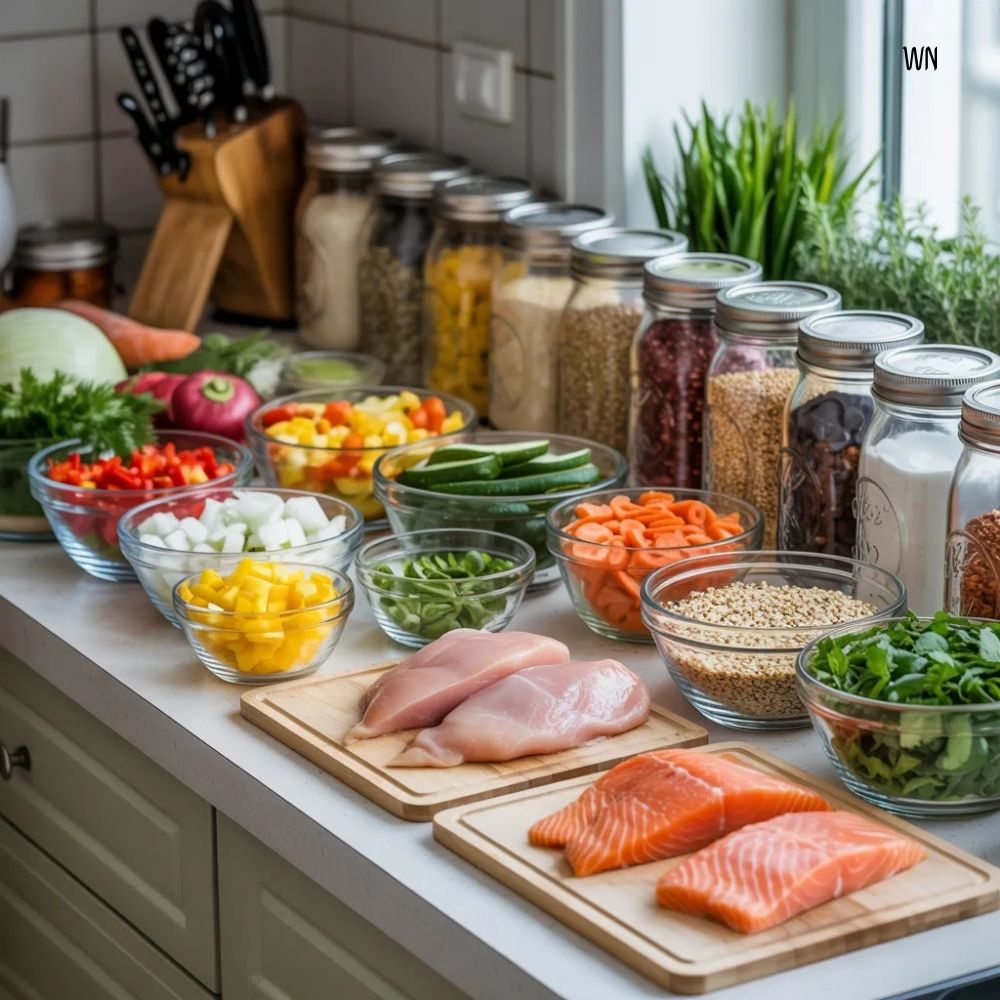
One of the most effective ways to save time during the week is to prep ingredients rather than complete dishes. This keeps meals flexible while still reducing effort.
Spend a short amount of time washing and chopping vegetables, cooking grains, or preparing proteins. These ingredients can then be mixed and matched throughout the week based on what you feel like eating.
For example, chopped vegetables can be used in salads, stir-fries, or quick sautés. Cooked grains can become the base for different meals depending on what you add. This approach saves time without committing you to specific meals in advance.
Idea 2: Choose One “Anchor” Prep Task Each Week
Meal prep becomes overwhelming when you try to do everything at once. A gentler approach is to choose one anchor task that supports multiple meals.
This could be roasting a tray of vegetables, cooking a pot of rice or pasta, or preparing one protein you enjoy. That single task becomes a foundation you can build on during the week.
Having one reliable component ready makes weekday cooking faster and less mentally demanding. Even on busy days, you’re no longer starting from zero.
Idea 3: Use the “Double Purpose” Cooking Habit
One of the simplest meal prep habits is cooking slightly more than you need and using the extra later. This saves time without requiring separate prep sessions.
When making dinner, intentionally prepare a little extra. Leftover vegetables, grains, or proteins can be reused for lunch or another meal. This habit feels natural and doesn’t add much effort in the moment.
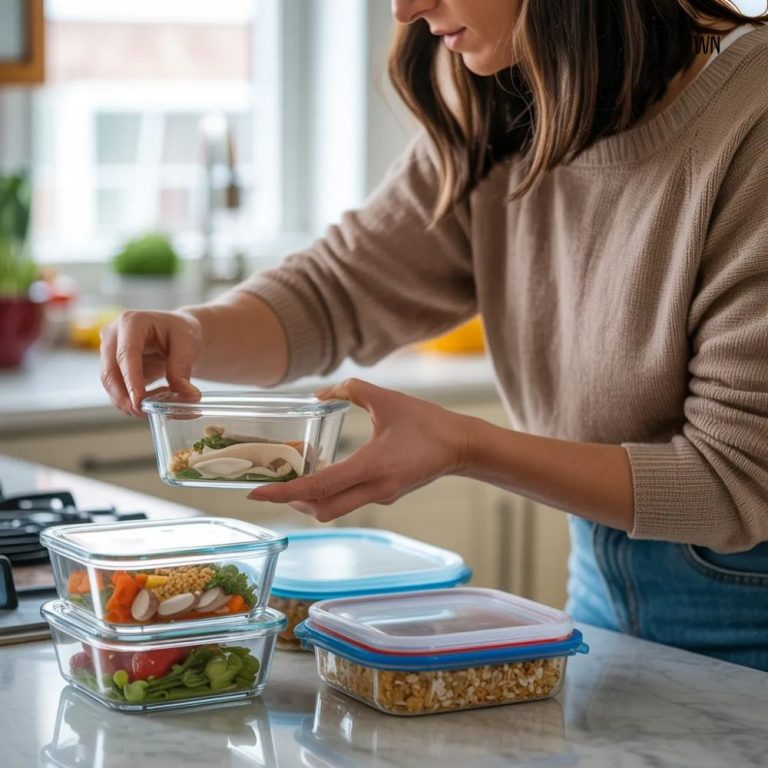
Double-purpose cooking works especially well when you store leftovers in clear containers so they’re easy to spot and use. It’s a quiet way to prep without feeling like you’re prepping.
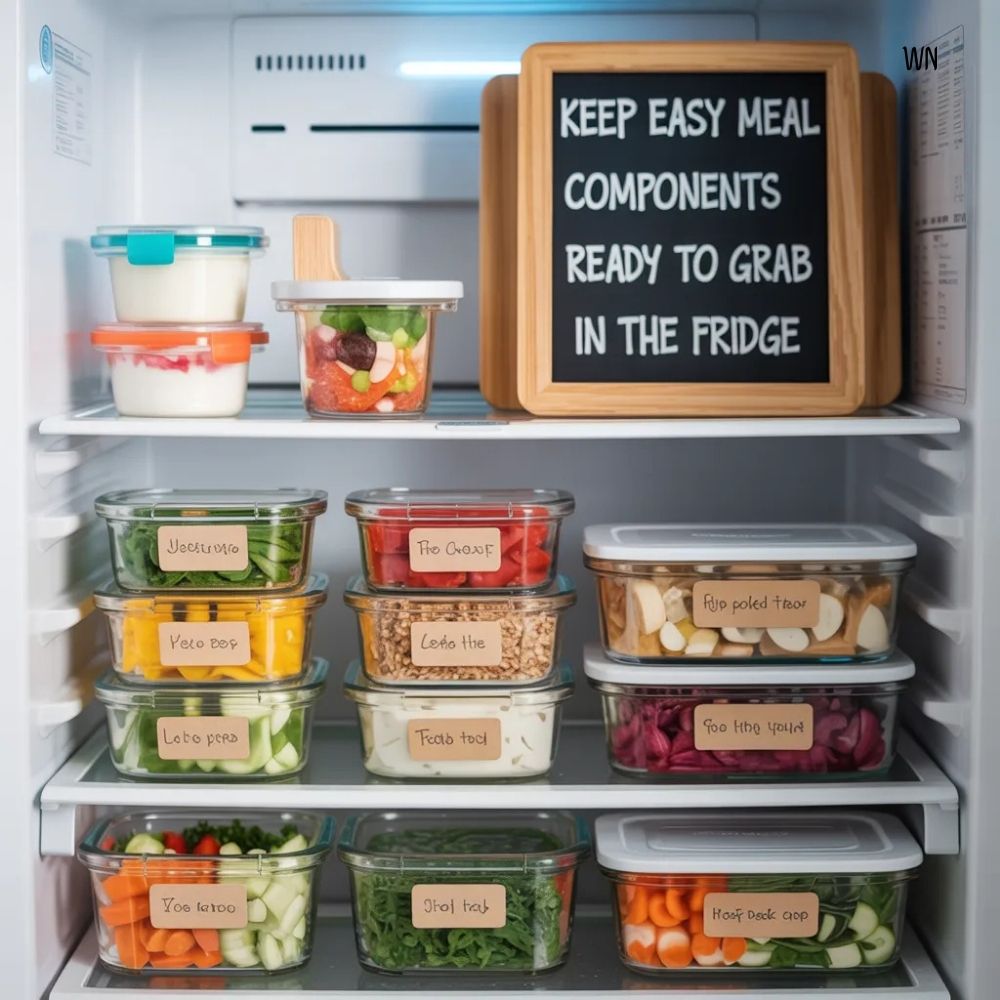
Idea 4: Keep Easy Meal Components Ready to Grab
Weekday meals feel stressful when everything requires cooking from scratch. Keeping simple, ready-to-use components on hand makes meals faster and easier.
This might include washed greens, cooked grains, roasted vegetables, or prepared sauces. When these pieces are ready, meals come together quickly with minimal effort.
The goal is not to create full meals in advance, but to remove the most time-consuming steps. Even one prepared component can cut cooking time significantly.
Idea 5: Plan for Flexible Meals, Not Exact Menus
Strict meal plans often break down when schedules change. Gentle meal prep focuses on flexibility rather than rigid menus.
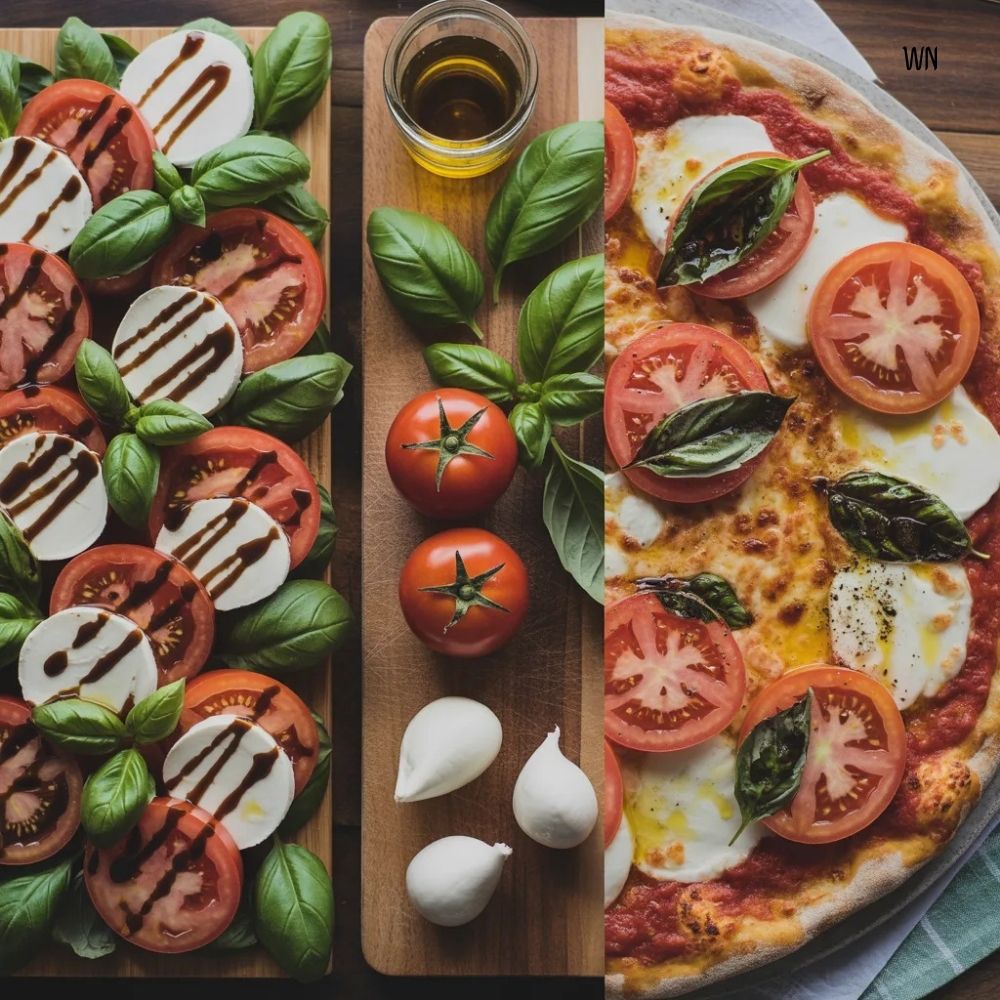
Instead of deciding exactly what you will eat each day, plan a few meal ideas that share ingredients. This allows you to adapt based on energy, appetite, or time.
For example, the same ingredients might work for a bowl, a wrap, or a simple plate-style meal. Flexibility reduces stress and helps prepped food actually get used.
How These Ideas Save Time During the Week
These gentle prep habits work together to reduce daily friction. Prepped ingredients reduce chopping time. Anchor tasks create reliable bases. Double-purpose cooking builds leftovers naturally. Ready components speed up meals. Flexible planning prevents decision fatigue.
You do not need to use all of these ideas. Even one or two can make weekday meals feel noticeably easier. Over time, these habits create a rhythm that supports your schedule instead of competing with it.
The most effective meal prep habits are the ones that feel light and repeatable. If a prep idea feels stressful, simplifying it is always an option. Adjusting your approach is part of making it work long term.
Saving even 10 or 15 minutes a day adds up over the week. Gentle prep is about reducing effort, not adding another obligation.
A Calm Takeaway
Meal prep does not have to be intense or time-consuming to be helpful. Simple habits like prepping ingredients, choosing one anchor task, cooking a little extra, keeping easy components ready, and planning flexibly can save time without pressure.
You do not need to prep everything or do it perfectly. Even one gentle change can make weekday meals feel calmer, easier, and far less stressful. Over time, these small habits help cooking fit more naturally into your life, one week at a time.