How to Reset Your Home in 5 Minutes at Night
Ending the day in a cluttered home makes the next day harder before it even begins. When surfaces are covered, items are scattered, and nothing feels settled, your brain stays slightly alert even while you are trying to rest. The good news is that your home does not need to be fully clean or organized…
Ending the day in a cluttered home makes the next day harder before it even begins. When surfaces are covered, items are scattered, and nothing feels settled, your brain stays slightly alert even while you are trying to rest.
The good news is that your home does not need to be fully clean or organized to feel reset. What it needs is closure. A short, intentional reset at night can make the space feel calm, functional, and ready for tomorrow without turning into another exhausting chore.
A five-minute home reset works because it focuses on high-impact actions rather than total cleanliness. We are not cleaning. We are not organizing. We are not fixing everything.
We are simply returning the home to a neutral state, where the mess is contained rather than spreading. When done consistently, this reset prevents buildup, reduces morning stress, and makes your home feel easier to live in overall.
Why a Nightly Reset Works Better Than Occasional Deep Cleaning
Most homes feel chaotic not because they are dirty, but because they are mid-use. Items are left where they were last handled, surfaces collect unfinished tasks, and objects slowly migrate from room to room. Deep cleaning once a week does not stop this drift. A nightly reset does.
The reset works because it interrupts accumulation. When items are returned to their general homes daily, clutter never reaches an overwhelming level.
This means less cleaning later, not more. The reset also creates a psychological endpoint to the day. When the environment looks settled, the brain can relax instead of scanning for unfinished business.
Importantly, the reset is short. Five minutes is small enough to do even on low-energy days. Because it is short, it is repeatable, and repeatability is what makes it effective.
The Core Rule of the 5-Minute Reset
Before we start, one rule makes this possible: we only touch items that are out of place, and we touch each item once. No sorting. No reorganizing. No “I’ll deal with this later” piles. Every item we pick up goes directly to its general home, even if that home is not perfectly organized.
This rule keeps the reset fast and prevents it from turning into a larger project. The goal is not improvement. The goal is containment.
This reset is a visual and functional reset, not a cleanliness standard. We are not scrubbing, folding laundry, filing papers, or reorganizing drawers. We are clearing surfaces, opening pathways, and putting the home back into a neutral state.
If you try to clean during this reset, it will take longer than five minutes. If you try to organize, it will never end. Keeping the scope small is what makes the reset sustainable.
Minute 1: Clear the Main Drop Surfaces
We always begin with the surfaces that collect the most clutter during the day. This is usually the kitchen counter, dining table, coffee table, or entry surface. These areas act like magnets for unfinished tasks, and when they are cluttered, the whole home feels messy.
In this first minute, we scan those surfaces and remove anything that does not belong there. Dishes go to the sink or dishwasher. Trash goes in the bin. Items that belong elsewhere are returned to their general room, not perfectly placed.
We are not wiping yet. We are clearing. Clearing these surfaces alone often makes the home feel dramatically calmer.
Minute 2: Return Items to Their Rooms
Next, we focus on items that migrated during the day. Shoes in the hallway, bags on chairs, mail on random surfaces, toys in living spaces, or clothing draped over furniture. We pick these items up and return them to the room they belong in, even if we do not put them away fully.
For example, laundry can go into the hamper, not folded. Papers can go into a designated tray, not sorted. Bags can go on hooks or chairs in their home area. This step prevents clutter from spreading and keeps mess contained to where it can be handled later.
Minute 3: Reset the Kitchen Enough for Morning Use
The kitchen does not need to be spotless at night, but it should be usable in the morning. During this minute, we focus only on what will make the kitchen easier to enter the next day.
This usually means loading or starting the dishwasher if possible, stacking dishes neatly if not, clearing the sink enough to be usable, and returning obvious items to their place. We do not deep clean. We do not scrub. We aim for “ready,” not “perfect.”
A kitchen that is reset at night saves time and stress the next morning without adding much effort in the evening.
Minute 4: Quick Visual Floor Check
We are not cleaning floors fully, but we do want to remove anything that makes the space feel unfinished or uncomfortable. During this minute, we pick up obvious items from the floor and address visible crumbs or debris in high-use areas.
This might mean picking up toys, straightening a rug, or wiping a sticky spot near the kitchen or entryway. We ignore the rest. The goal is not cleanliness, but visual calm and safe pathways. This step helps the home feel settled and prevents small messes from becoming larger ones.

Minute 5: Prepare Tomorrow’s Entry Point
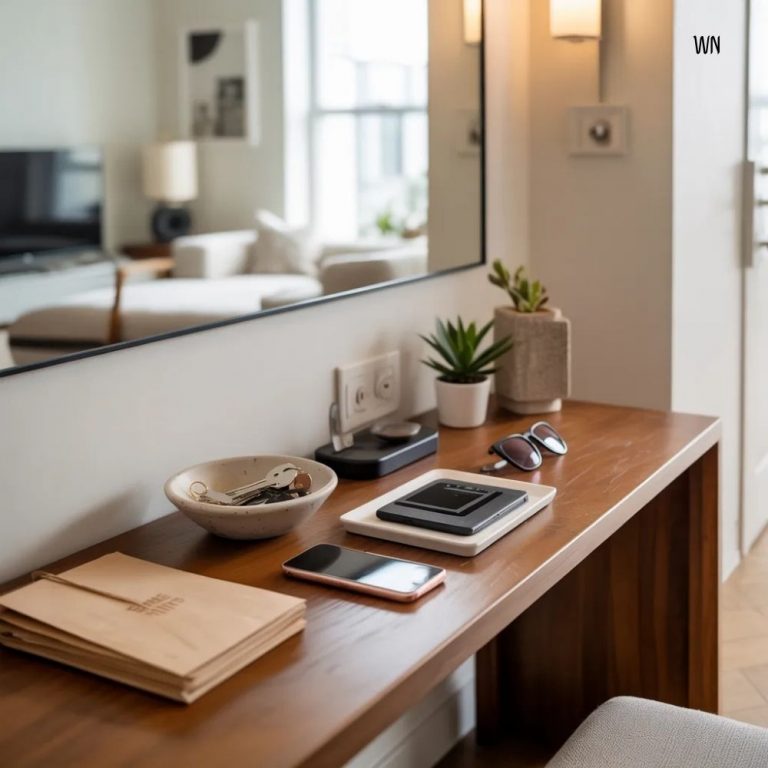
The final minute is about setting up a smooth start for the next day. We focus on the place where tomorrow begins. This might be the entryway, the kitchen counter, or a work surface.
We place keys, bags, or essentials where they will be needed. We clear the path to the door. We make sure the first thing you see in the morning is neutral rather than chaotic.
This step does not require planning tomorrow fully. It simply removes friction. Ending the reset with this step creates a sense of closure and readiness.
Why This Reset Feels So Effective
This reset works because it targets transition points. Most daily mess accumulates during transitions: coming home, eating, relaxing, getting ready for bed. By resetting those areas, we stop clutter from carrying over into the next day.
The reset also reduces mental load. When the home looks settled, the brain does not feel the need to track unfinished tasks visually. This allows you to relax more fully in the evening and start the next day with less resistance.
What to Do on Low-Energy Nights
Some nights, five minutes still feels like a lot. On those nights, we recommend doing a two-minute version. Clear one surface and reset the kitchen sink. That is enough to create partial closure and prevent buildup.
Consistency matters more than completeness. A small reset done regularly beats a perfect reset done rarely.
When this reset becomes routine, something interesting happens. Your home stays more manageable without extra cleaning. Mess does not have time to accumulate. Morning routines feel easier. Even busy weeks feel less overwhelming.
This is not because you are doing more. It is because you are stopping mess from carrying forward.
A Helpful Final Thought
A home reset is not about control or perfection. It is about giving the day a clean ending. When we spend five minutes returning the home to a neutral state, we give ourselves permission to rest and a better starting point tomorrow.
If you would like, we can next build a room-by-room reset, a family-friendly version, or a morning reset that protects your evenings. Just tell us what would help you most right now.