The Best Way to Organize a Fridge So Food Doesn’t Get Forgotten
Most food waste does not happen because we buy too much or forget what we like to eat. It happens because food becomes invisible. Items get pushed to the back, stacked behind taller containers, or stored in places that do not match how we actually cook and eat. When food is out of sight, it…
Most food waste does not happen because we buy too much or forget what we like to eat. It happens because food becomes invisible. Items get pushed to the back, stacked behind taller containers, or stored in places that do not match how we actually cook and eat.
When food is out of sight, it stops existing in our minds, and by the time we remember it, it is often too late. The encouraging part is that this problem is not about discipline or better memory. It is about layout. When a fridge is organized to match real daily habits, food gets used naturally.
The goal of fridge organization is not beauty or perfection. It is visibility, access, and flow. When you can see what you have, reach it easily, and understand where things belong, forgotten food becomes rare.
This guide walks through a clear, repeatable system that works for real households, real schedules, and real leftovers. You do not need special containers, labels, or a full fridge makeover. You need the right zones and a few rules that stay the same every week.
Why Food Gets Forgotten in the First Place
Before organizing anything, it helps to understand why food disappears in the fridge. Most fridges are organized by habit or guesswork rather than intention. Items are placed wherever there is space at the moment, which means the layout changes constantly.
Leftovers end up behind drinks. Produce drawers become storage for everything except produce. Condiments multiply and block the view of what actually needs to be eaten.
Another common issue is mixing time-sensitive food with long-lasting food. When leftovers, fresh produce, and condiments all compete for the same space, the items that need attention soon get buried under items that can wait.
The solution is not checking the fridge more often. It is setting it up so the important food stays visible by default.
The Core Rule That Makes This System Work
The most important rule in a fridge that prevents food waste is simple: the food that needs to be eaten first should live in the most visible, easiest-to-reach space. If this rule is followed consistently, everything else becomes easier.
Many people organize their fridge by category alone, such as dairy on one shelf and leftovers wherever they fit. While categories are helpful, priority matters more. A yogurt that expires next week does not need the same visibility as leftovers that should be eaten within two days. When priority drives placement, forgotten food drops dramatically.
Step One: Clear the Fridge Enough to Reset Zones
You do not need to empty the entire fridge, but you do need enough space to see what you are working with. Start by removing expired items and anything that is clearly no longer usable. This step alone often frees up more space than expected.
Next, group food loosely by type on the counter. Leftovers together, produce together, drinks together, condiments together. Do not organize within these groups yet. The purpose is simply to see how much of each type you actually have. This gives you a realistic picture of what the fridge needs to support.
Once this is done, wipe obvious spills or sticky spots. This does not need to be a deep clean. A quick reset helps the new system stick.
Step Two: Create a “Use First” Zone at Eye Level
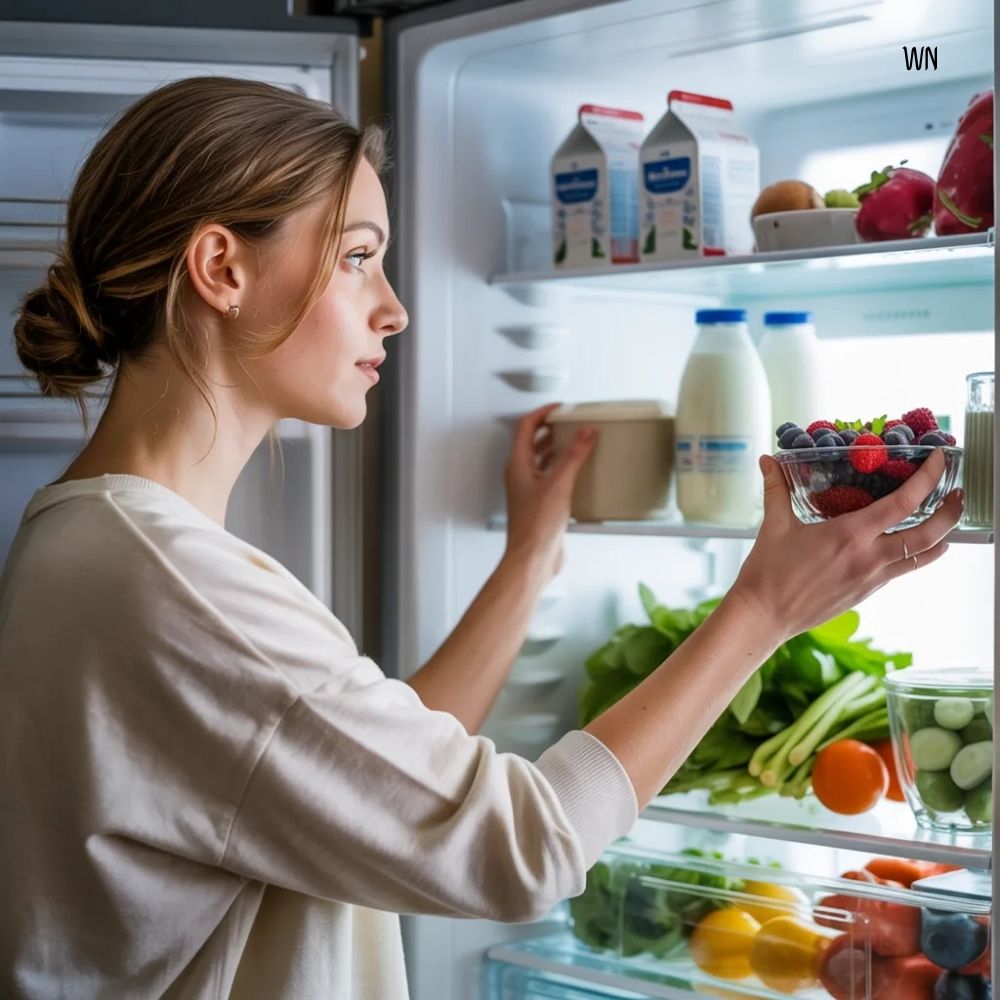
This is the most important part of the entire system. Choose one shelf at eye level and designate it as the Use First zone. This shelf is reserved for food that needs attention soon, such as leftovers, opened packages, prepped ingredients, and produce that is nearing its peak.
This shelf should never be crowded. When it is overfilled, items hide each other, and the system breaks down. If space becomes tight, it is a signal to eat from this shelf before adding more to it.
By placing this zone at eye level, you remove the need to remember what needs to be eaten. You see it every time you open the fridge. This alone prevents a large percentage of forgotten food.
Step Three: Store Long-Lasting Items Below or Above
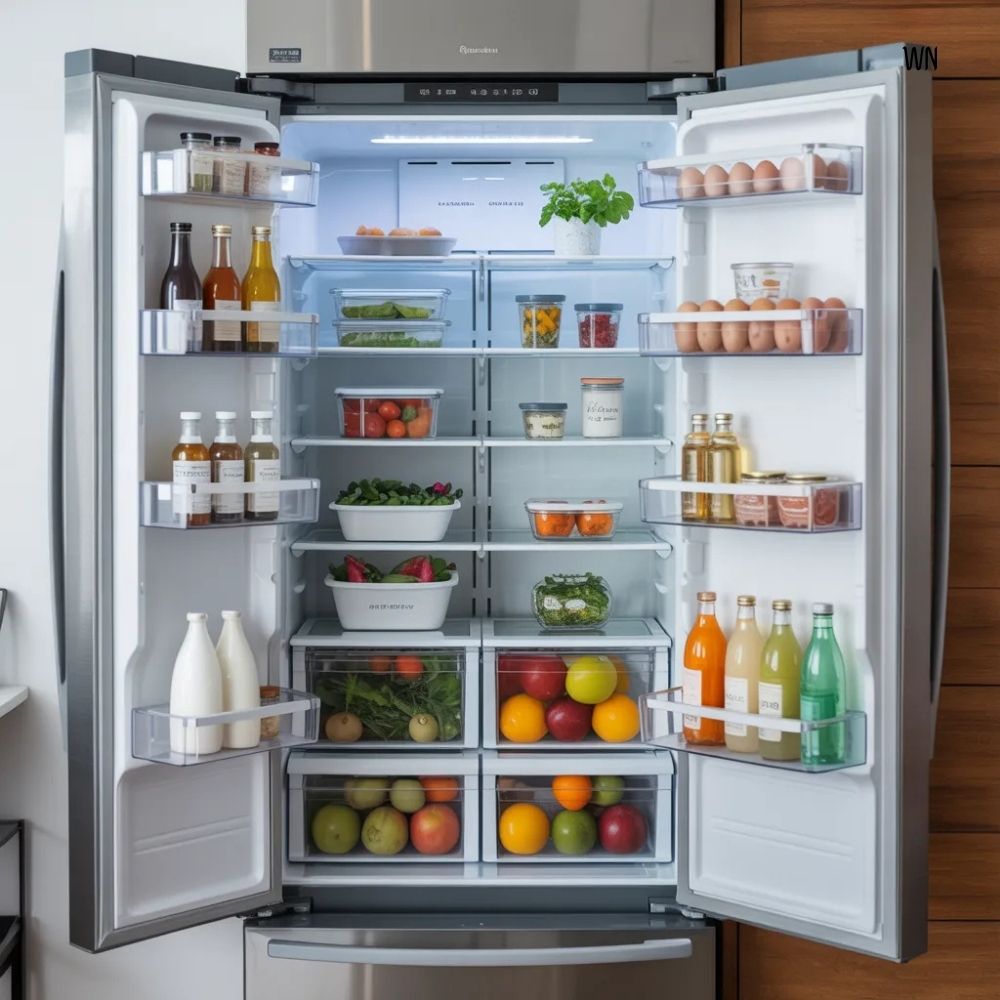
Once the Use First zone is established, place long-lasting items such as condiments, drinks, unopened dairy, and sealed sauces on higher or lower shelves. These foods are important but not urgent. They can afford to be slightly less visible without risk.
Condiments are especially important to control. They tend to multiply and spread across shelves, blocking sightlines. Group them together on one shelf or in the door so they do not creep into priority space. Drinks should also have a designated area, ideally lower in the fridge, where their height will not block other food.
This separation creates a natural visual hierarchy. When you open the fridge, your eyes go first to what needs to be used, not what can wait.
Step Four: Rethink the Produce Drawers
Produce drawers are often the biggest source of forgotten food. They are designed to preserve freshness, but because they hide contents, they are easy to ignore. The solution is not removing produce drawers entirely, but using them intentionally.
Use produce drawers for items that last longer, such as carrots, cabbage, apples, or citrus. More delicate produce, such as berries, leafy greens, and herbs, should live in the Use First zone or in clear containers on a shelf where they are visible.
If you consistently forget produce in drawers, treat them as storage, not reminders. The food you want to remember should stay in sight.
Step Five: Use Clear Containers to Create Visual Order
You do not need matching containers or expensive organizers. What matters is visibility and containment. Clear containers help group similar items and prevent small packages from scattering across shelves.
For example, placing all opened cheese in one clear bin makes it easy to see what you have and prevents pieces from being pushed to the back. The same applies to deli items, snacks, or meal prep components. When items live together, they are more likely to be noticed and used.
Avoid stacking containers on top of each other whenever possible. Stacks hide food. One layer with clear sightlines is far more effective than multiple layers of neatly stacked containers.
Step Six: Keep Leftovers Front and Center, Always
Leftovers are the most commonly forgotten food, and they require the clearest system. Every leftover should go into a container that fits easily in the Use First zone. Oversized containers encourage stacking and hiding.
Whenever possible, store leftovers in transparent containers so the contents are visible without opening them. If you cannot see what it is, your brain will treat it as unknown and avoid it.
Make it a habit that leftovers never go behind anything else. If you cannot place them in the Use First zone without moving something, that something probably belongs elsewhere.
Step Seven: Use the Door Strategically
The fridge door is the warmest part of the fridge and best suited for items that are stable, such as condiments, sauces, and drinks. Avoid storing milk or highly perishable items here unless your fridge design specifically supports it.
By keeping the door dedicated to non-urgent items, you free up interior shelf space for food that benefits from stable temperature and visibility. This also prevents the door from becoming a random storage zone that competes with more important food.
Why This System Reduces Waste Without Extra Effort
This approach works because it aligns with how we naturally use the fridge. Instead of relying on memory or motivation, it relies on visibility and priority. The foods that need action stay visible. The foods that can wait move out of the way. Over time, this becomes automatic.
Many people notice that grocery shopping becomes easier, meals feel less stressful, and the fridge feels calmer overall. Less food is forgotten because less food is hidden.
Every household is different. If your fridge is very small, the Use First zone might be a narrow shelf or even a clear bin placed at eye level. If you cook in batches, you may need a slightly larger priority zone. The principle stays the same even when the layout changes.
A Helpful Final Thought
A fridge that prevents food waste does not need to be perfect or pretty. It needs to be intentional. When we organize based on what needs attention first, food naturally gets used, meals feel easier, and waste drops without extra effort.
If you would like, we can next create a simple weekly fridge reset routine, a meal planning flow that works with this system, or a pantry setup that complements your fridge layout. Just tell us what would help you most right now.