The Fastest Way to Clean a Kitchen After Dinner (Under 10 Minutes)
We all want to end the day feeling finished, not staring at a messy kitchen that quietly asks for more energy when we have none left. The good news is that cleaning a kitchen after dinner does not have to be exhausting, complicated, or time-consuming. Most kitchens take too long to clean simply because there…
We all want to end the day feeling finished, not staring at a messy kitchen that quietly asks for more energy when we have none left. The good news is that cleaning a kitchen after dinner does not have to be exhausting, complicated, or time-consuming.
Most kitchens take too long to clean simply because there is no clear order. When we move between dishes, counters, trash, and floors without a plan, we end up doing the same work twice, touching the same items repeatedly, and spending far more time than necessary.
With the right sequence and a few clear limits, a normal after-dinner kitchen reset can be done calmly and confidently in under ten minutes. We are aiming for a kitchen that feels clean, usable, and mentally “closed” for the night so you can actually rest.
This method is designed for real evenings, real meals, and real energy levels. When we follow the steps in order and resist the urge to do extra tasks, this process becomes predictable, fast, and surprisingly satisfying.
The Simple Principle That Makes This Work
Before we look at the steps, there is one principle that makes the entire system effective: we touch each item once. Every time something is picked up and set down to deal with later, time is lost.
Every temporary pile creates another task. When we decide immediately where something belongs and put it there, the kitchen clears faster and feels calmer almost right away.
This principle is not about rushing. It is about removing unnecessary choices. When we know that every item we touch goes directly to its final place, cleanup becomes straightforward instead of mentally tiring.
Why the Order Matters So Much
Cleaning quickly is not about moving faster. It is about doing things in the right order so we do not undo our own work. When counters are wiped before dishes are managed, they need to be wiped again.
When floors are cleaned before crumbs are cleared from surfaces, mess falls back down. When we jump between tasks, the kitchen never fully resets.
The order we use here is intentional. Each step prepares the space for the next one, which means no backtracking and no re-cleaning. Once you learn this sequence, you no longer have to decide what to do next. You simply move through it.
Step One: Take Control of the Dishes First
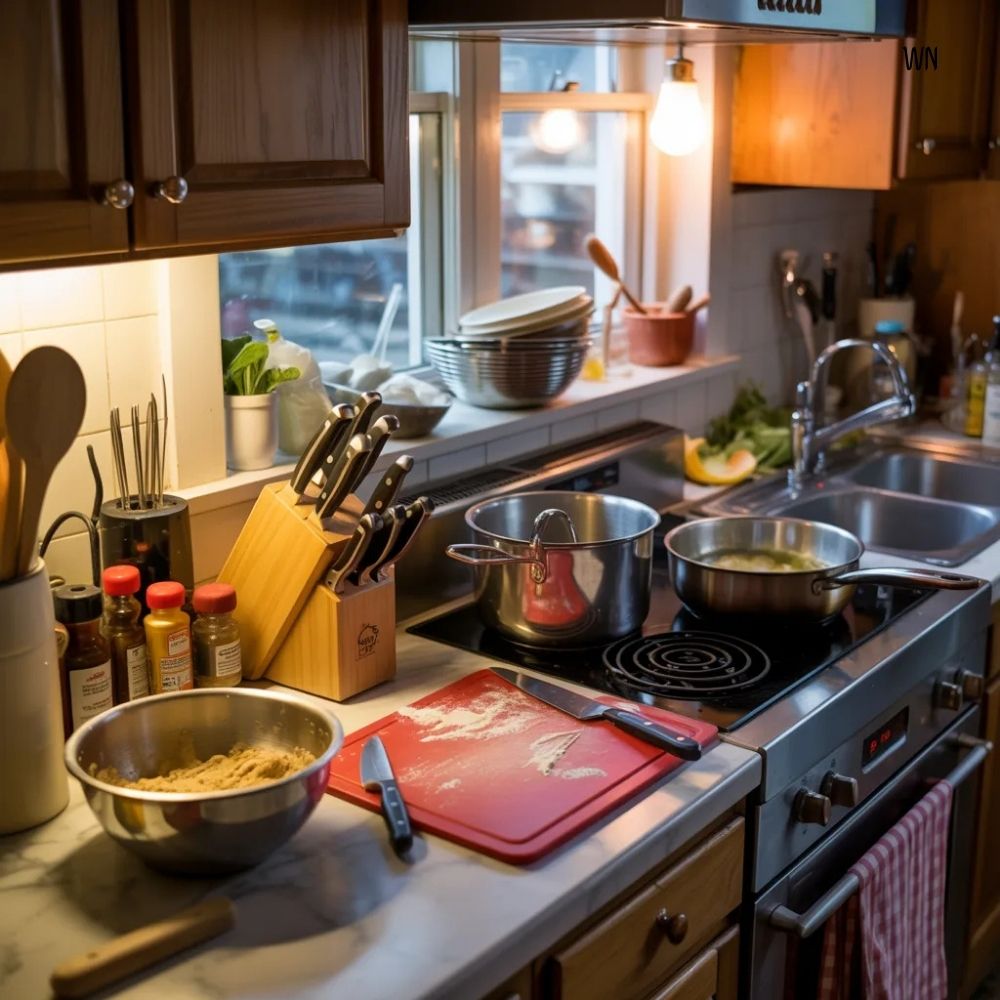
We always begin with the dishes, even if the counters look worse. Dishes are the biggest physical and visual obstacle in the kitchen, and until they are handled, everything else takes longer. Start by scraping plates directly into the trash or compost.
There is no need to rinse at this stage. Stack dishes neatly next to the sink or dishwasher instead of spreading them across the counter. Gather all cutlery into one place so nothing is scattered.
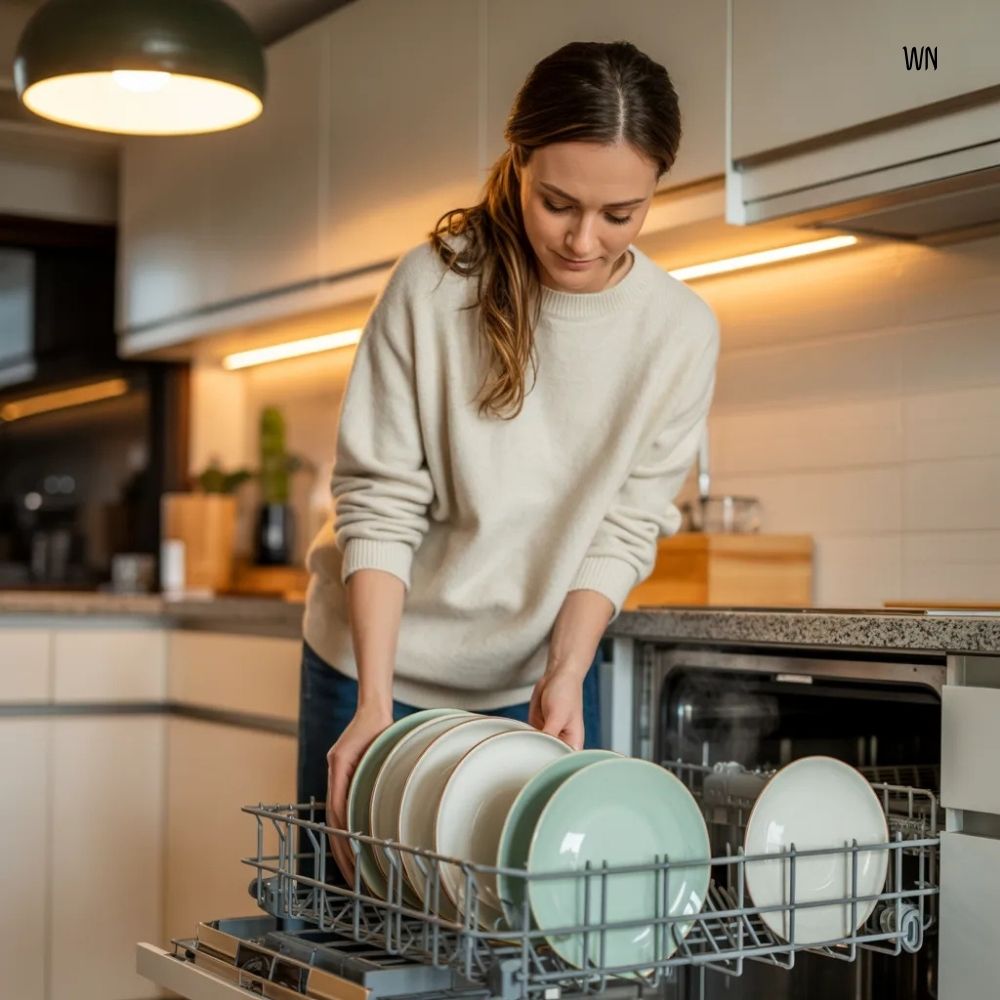
If you have a dishwasher, open it and begin loading right away. Plates can face the same direction, cups can go upright, and cutlery simply needs enough separation to clean properly. This does not need to be perfect.
If you wash by hand, fill the sink with hot water and soap immediately and place dishes inside to soak. Large pots or pans with stuck-on food should go straight into the water without scrubbing.
This step should feel quick and purposeful. In about one minute, the kitchen becomes easier to work in, and everything else speeds up as a result.
Step Two: Clear the Counters in One Calm Pass
Once dishes are soaking or loading, we clear the counters before cleaning them. Cleaning around objects wastes time and leaves surfaces half-done. Choose one end of the counter and move in a single direction, touching each item once and sending it to its final home.
Leftover food goes directly into containers and into the refrigerator. Packaging is thrown away immediately. Cooking tools go straight into the dishwasher or sink. Pantry items return to their shelves without sorting or reorganizing. We are not organizing here. We are clearing space.
By the end of this step, the counters should be mostly empty except for items that permanently live there. This alone makes the kitchen feel dramatically better and sets us up for fast surface cleaning. This step usually takes about two minutes.
Step Three: Wipe Counters and Stove Once, in the Right Direction
With counters fully clear, we can now clean them properly and only once. Use one damp cloth or sponge for all surfaces. Start with the cleanest area and move toward the dirtiest, usually the stove. This keeps crumbs and grease from spreading.
Wipe crumbs directly into your hand or the trash rather than onto the floor. If you use cleaner, spray it onto the cloth instead of the counter to avoid oversaturating surfaces. We do not scrub during this step. If a spot does not come off easily, it can wait for another day. Scrubbing adds time and effort without improving daily cleanliness.
This step restores the kitchen visually and functionally and should take about two minutes when done calmly and in order.
Step Four: Reset the Sink to Signal “Done”
The sink is the emotional center of the kitchen. When it looks clean, the whole room feels cleaner. Drain any water that is no longer needed, rinse the basin quickly, and wipe the sink and faucet with the same cloth you are already using. Leave the sink empty or with soaking pans only.
This small step makes a big difference. A clean sink tells your brain that the work is finished, which helps you relax instead of feeling like something is still waiting to be done.
Step Five: Quick Floor Check, Not a Full Clean
A full floor cleaning is not part of a nightly reset, and skipping it is one of the reasons this method stays fast. Instead, look only at high-use areas near the sink, stove, and prep space. Pick up visible crumbs or sticky spots with a cloth, paper towel, or quick sweep. Ignore the rest of the floor.
This keeps the kitchen comfortable and prevents unpleasant surprises the next morning without turning cleanup into a bigger task. One minute is enough.
Step Six: Trash and a Clear Exit
The final step is always trash management and a physical exit. Take the trash out if possible, or tie the bag and place it by the door. Put your cleaning cloth or sponge in its drying spot. Turn off the kitchen light and leave the room.
This final action creates closure. Without it, the kitchen can still feel mentally unfinished, even if it is clean. One minute here makes the entire reset feel complete.
Why This Method Feels Easier Over Time
This system works because it removes guesswork and limits how much we do each night. We stop trying to clean everything and instead focus on what creates the biggest impact in the shortest time.
When the same sequence is repeated each evening, cleanup becomes automatic rather than draining. The kitchen stays easier to manage, and mess never has a chance to build up.
Over time, many people notice that the kitchen stays cleaner with less effort, mornings feel calmer, and evenings feel more complete. That is the real benefit of a fast, reliable reset.
A Helpful Final Thought
A kitchen does not need to be perfect every night to feel good. It needs to be reset with intention and limits. When we follow a clear order, touch each item once, and stop at “clean enough,” we save time and energy while still ending the day feeling accomplished.
If you would like, next we can build this same kind of practical system for bathrooms, laundry, or a whole-house nightly reset. Just tell us what would help you most right now.